
Rapiers

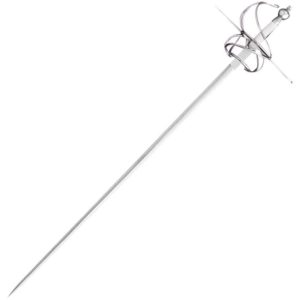
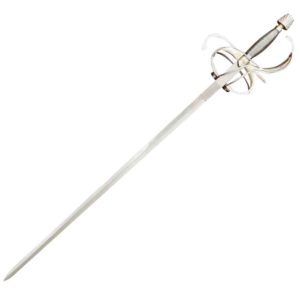
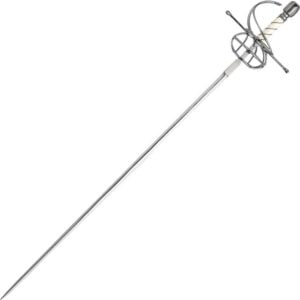
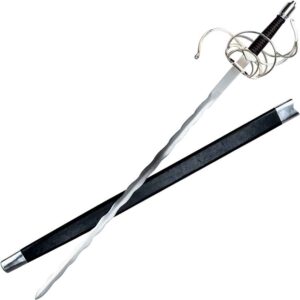
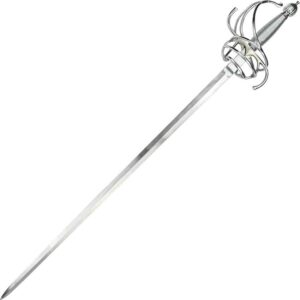
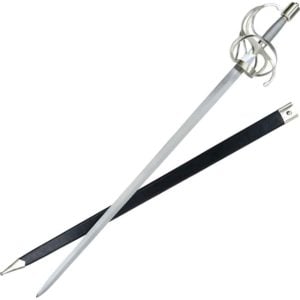
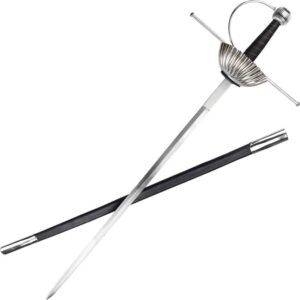
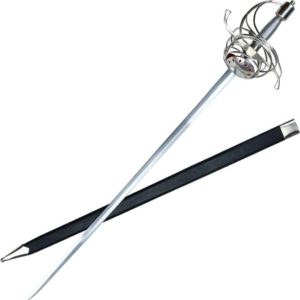
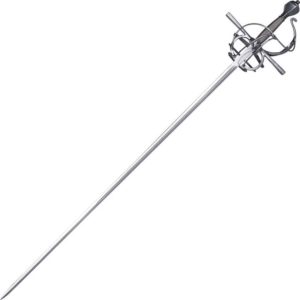
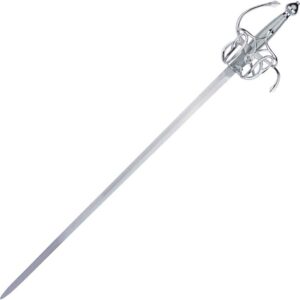

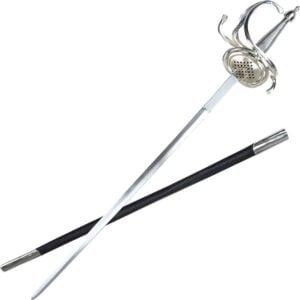
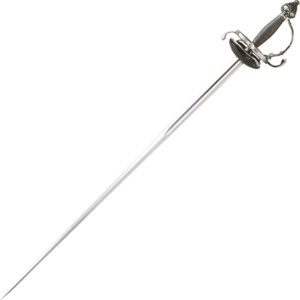
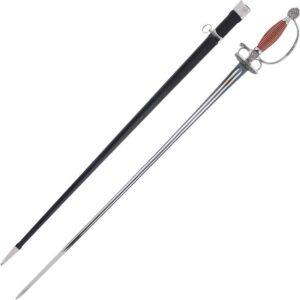
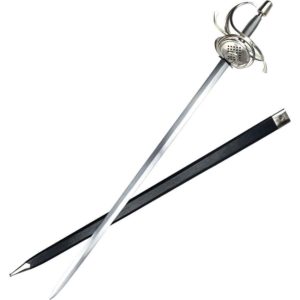
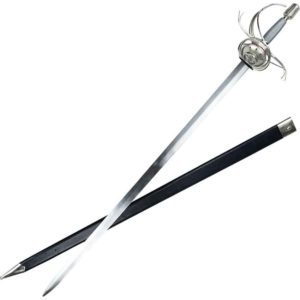
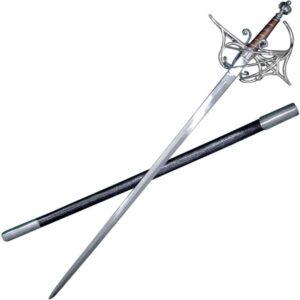

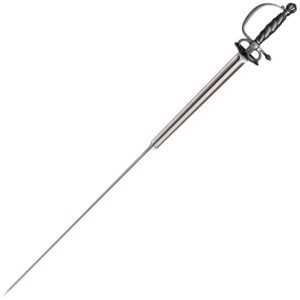
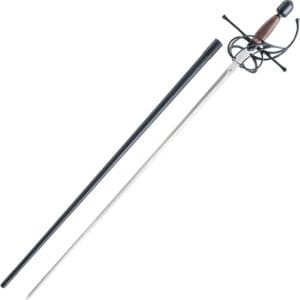
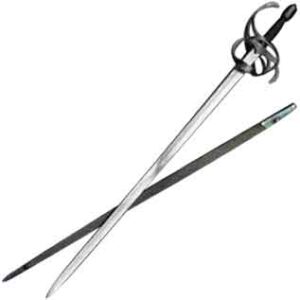
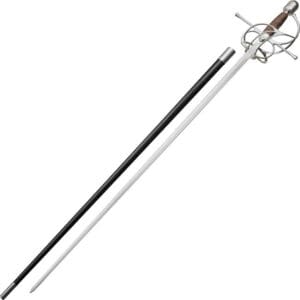
The rapier sword was popular in the late 16th and early 17th centuries. It was a dueling weapon developed from cut-and-thrust swords. Its use was more brutal and forceful than that of light sport fencing today.
Starting in 1470, any civilian sword was often referred to as simply a “rapier,” but it quickly became a slender, civilian sword. An English document from the 1500s also uses the term “rapier-sword” to advise courtiers on how to be armed.
These terms indicate an understanding that a new slender blade style was coming into civilian use. Some sources also reference it as a dress sword for those in courtly circles.
Eventually developing into an edgeless, ideal thrust-based weapon, the quick, innovative rapiers superseded the military swords for personal duels and urban self-defense. As the rapier developed, it became capable of making only limited lacerations.
Earlier swords and earlier varieties of rapier weapons are still often confused with later weaponry, which gave rise to their method. The development of the side sword and straight-line techniques contributed significantly to the development of fencing form styles. Rapier masters taught these refined techniques as a form of martial arts.
As a civilian weapon of urban self-defense, a true rapier was a tip-based fencing armament that used stabbing and piercing, not slashing and cleaving. This one-handed sword allowed rapier fighters to maneuver quickly and control their opponent’s blade with precision.
Often paired with a parrying dagger in the off-hand for additional defense, true rapiers ranged from early designs with flat, triangular blades to thicker, narrower hexagonal ones. The rapier blade had no true cutting edge like those of wider swords and military weapons for war.
The blade length varied, with some preferring a long rapier for extended reach, while others favored designs that would later evolve into the tiny sword.
What Type of Sword Is a Rapier?
Rapiers (or the espada ropera in Spanish) are civilian blades used for dueling, defense, and as a sidearm. It became popular in Western Europe, particularly among Italian, Spanish, and French users, during the Renaissance, particularly between the 16th century and early 17th century.
These are a type of weapon with a slender two-edged blade and a sharp-pointed end used for stabbing and piercing.
Rapier hilts range from intricate hilt styles to later and cupped styles. They also include a cross-style guard and knuckle bow to protect the hand holding the armament.
The intricate hilt designs showcased both functionality and craftsmanship. The blade length is perfect for striking with force and speed during a duel, and its sturdy build results in the weaponry’s noticeable “bend” when used.
Fun fact: Films set in the 16th and 17th centuries often depict rapiers, small swords, or sabers for duels and combat, authentic cut-and-thrust weapons of the era.
Your Blade of Choice for Rapier Fencing
Whether you’re looking for an accurate replica for LARP, cosplay, training, historical reenactments, or other pursuits, our rapiers are some of the best and most detail-oriented steel crafts you can find on the market today.
We provide a wide range of swords, from Classica and Bone Grip Swept Hilt rapiers to Hutton Sabers and Colichemarde Swords. We know the devil is in the details, so we only choose high-quality craftsmanship for our sword merchandise.
Our blades are forged from high-carbon steel, which gives them weight so they feel genuine in your hands. Most of these swords are crafted by hand to capture all the finer details. They are modeled after real 16th- and early 17th-century weapons housed in collections like the Royal Armouries.
Wear your Renaissance costume with pride, courtesy of the rapier choices from our collection.
Frequently Asked Questions
How is a rapier different from other swords?
Rapiers differ from military swords like broadswords or sabers, which were built for slashing and cutting. These swords are designed for thrusting, with a sharp point, an intricate hilt, and a narrow blade.
This precision focus made rapiers perfect for duels, where agility and accuracy were key, while military ones prioritized versatility in combat.
Why are modern rapiers popular in LARP and cosplay?
Modern rapiers are sought after in LARP, cosplay, and fencing due to their historical accuracy and craftsmanship. Many replicas are made with high-quality steel, ensuring they feel authentic and durable, closely mirroring original Renaissance-era designs.
These weapons often feature detailed hilts and are hand-forged, making them popular for enthusiasts looking for faithful recreations to complete their costumes or training sessions.
Get Your Epic Rapier Combat Replica Here at Medieval Collectibles!
Need help with something? We won’t make you wait for an answer–just call us at 1-877-637-9673, or email us at service@medievalcollectibles.com.
You can also drop your comments or concerns here, or chat with our customer service representative by clicking the help button at the lower right corner of our site.