
Viking Helmets
-
-

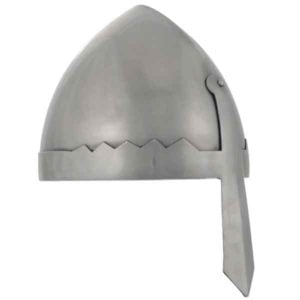
Norman Nasal Helmet
SKU: MCI-2423 Price range: $80.00 through $90.00 Add to Cart This product has multiple variants. The options may be chosen on the product page -

Raven Helmet – Epic Dark
SKU: MCI-3352 Price range: $187.00 through $204.00 Add to Cart This product has multiple variants. The options may be chosen on the product page -
-
-
-
Gjermundbu Helmet with Aventail
SKU: AB3951 $154.00 Add to Cart This product has multiple variants. The options may be chosen on the product page -
Viking Spangenhelm – Dark Metal Finish
SKU: MCI-2432 Price range: $121.00 through $132.00 Add to Cart This product has multiple variants. The options may be chosen on the product page -
Thorsten Steel Spangenhelm
SKU: MY100550 $81.00 Add to Cart This product has multiple variants. The options may be chosen on the product page -
Blacwin Steel Norman Helmet
SKU: MY100496 $91.00 Add to Cart This product has multiple variants. The options may be chosen on the product page -
-
-
-
-
-
Dreki Helmet – Matte Polish/Epic Dark
SKU: MCI-3766 $139.00 Add to Cart This product has multiple variants. The options may be chosen on the product page -
-
-
Blacwin Darkened Norman Helmet
SKU: MY100497 $101.00 Add to Cart This product has multiple variants. The options may be chosen on the product page -
Raven Helmet – Polished Steel
SKU: MCI-3351 Price range: $176.00 through $187.00 Add to Cart This product has multiple variants. The options may be chosen on the product page -
-
-
-
Epic Norman Nasal Helmet
SKU: MCI-2418 $99.00 Add to Cart This product has multiple variants. The options may be chosen on the product page -
-
Viking Mask Helmet
SKU: MCI-3034 Price range: $80.00 through $84.00 Add to Cart This product has multiple variants. The options may be chosen on the product page -
Spangenhelm with Medium Flare Nasal Guard
SKU: AB0399 $123.00 Add to Cart This product has multiple variants. The options may be chosen on the product page -
-
-
-
Viking Spangenhelm – Steel
SKU: MCI-2433 Price range: $90.00 through $95.00 Add to Cart This product has multiple variants. The options may be chosen on the product page -
Saint Wenceslaus Cabasset
SKU: MH-H0934 $108.00 Add to Cart This product has multiple variants. The options may be chosen on the product page -
Spangenhelm with Face Guard
SKU: MHR-H0923 $169.00 Add to Cart This product has multiple variants. The options may be chosen on the product page -
-
Odomar Viking Leather Helmet
SKU: RT-249 $280.00 Add to Cart This product has multiple variants. The options may be chosen on the product page -
-
-
Steel Spangenhelm
SKU: MH-H0859 $98.00 Add to Cart This product has multiple variants. The options may be chosen on the product page -
-
-
-
-
Phrygian Nasal Helmet
SKU: AB0459 $105.00 Add to Cart This product has multiple variants. The options may be chosen on the product page -
Thorsten Darkened Spangenhelm
SKU: MY100551 $91.00 Add to Cart This product has multiple variants. The options may be chosen on the product page -
-
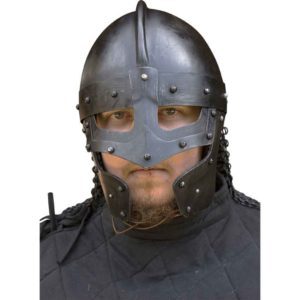
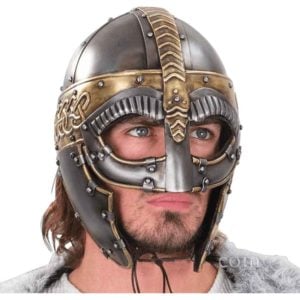
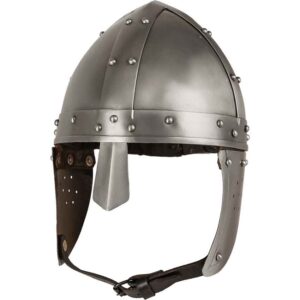
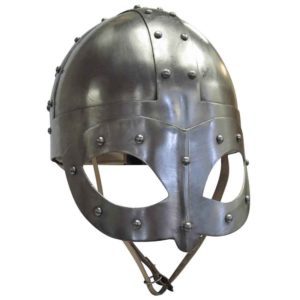
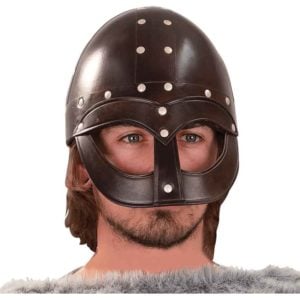
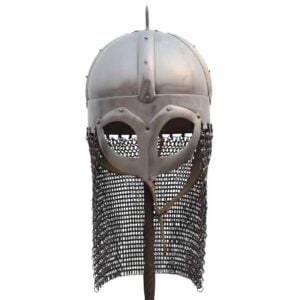


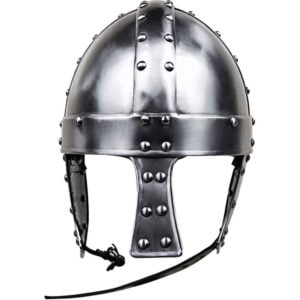
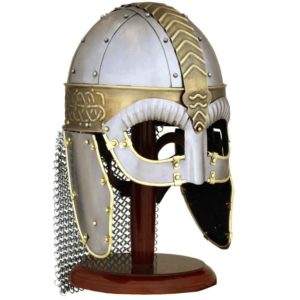
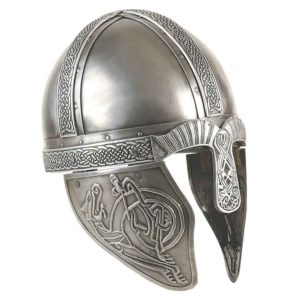
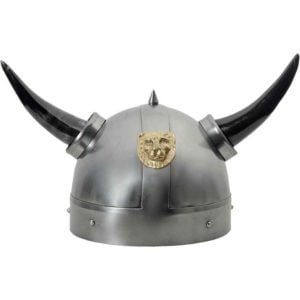
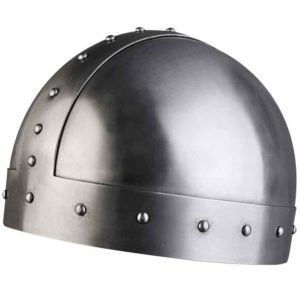
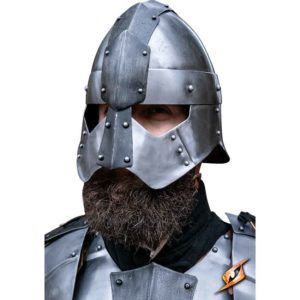

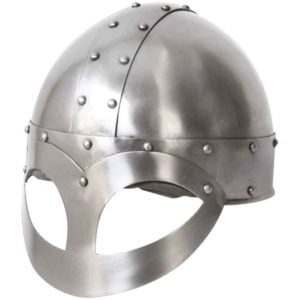
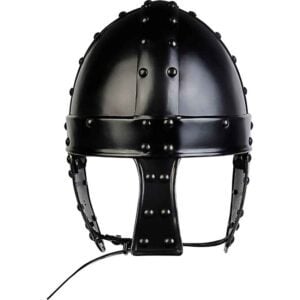
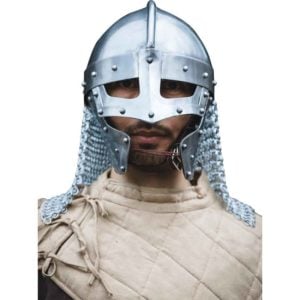
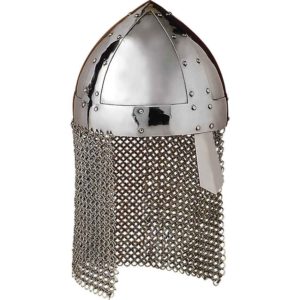
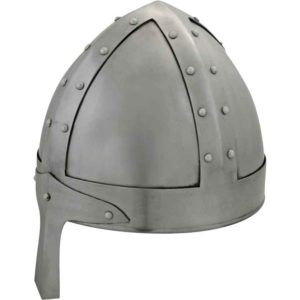

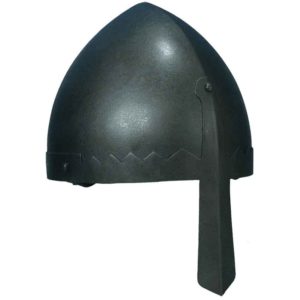
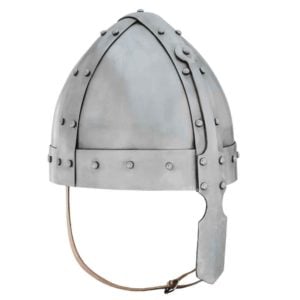
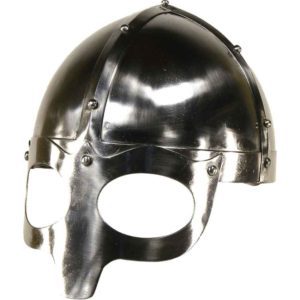
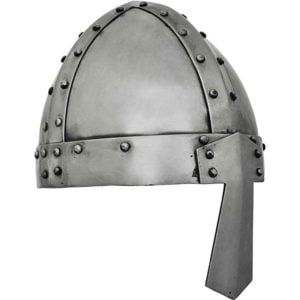
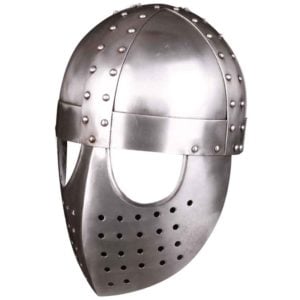
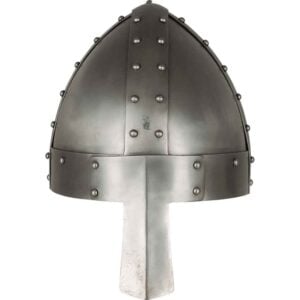
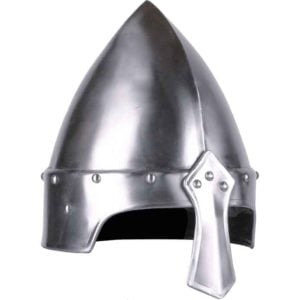
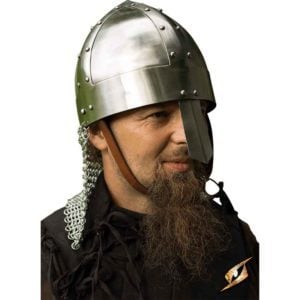
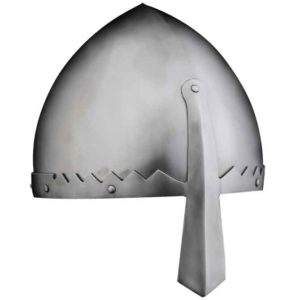
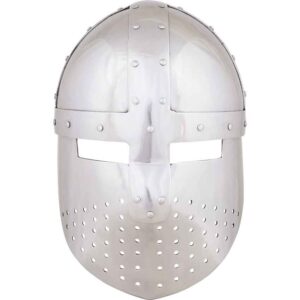
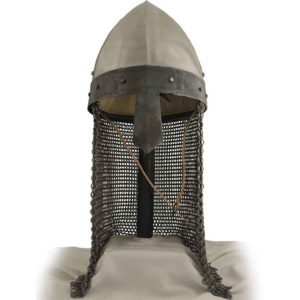

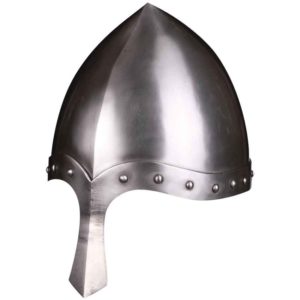
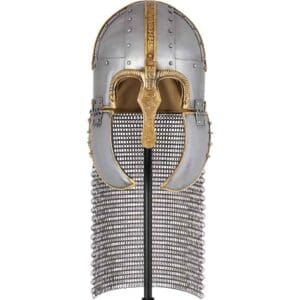
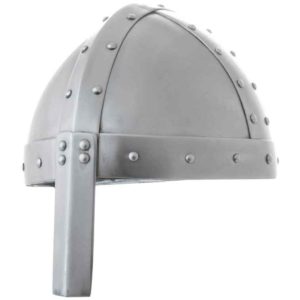

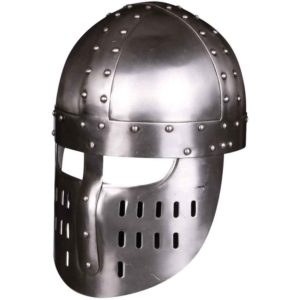
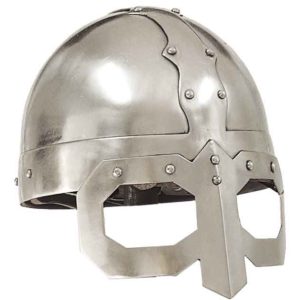

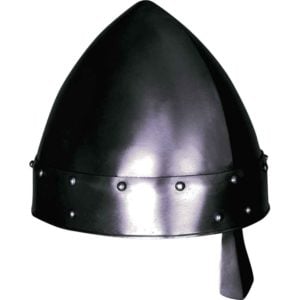
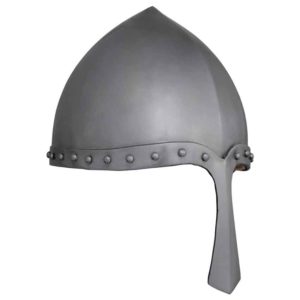

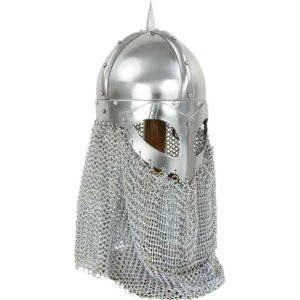

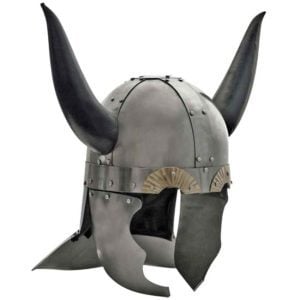
When Viking helmets are mentioned, the thought of a fantasy-style helmet with wings or other decorations comes to mind. While we offer those types of Viking helmets, including horned helmets and decorative multiple variants, we also provide historically accurate Viking helmet versions.
These helmets feature hinged cheek plates, nasal guards, a chin strap attached, and simple lines that protect the warrior’s head.
Not all Viking-era helmets or Norse helmets have cheek plates. Our Norman helmets usually have a conical shape, while the Viking styles are more rounded on the top.
The Viking and Norman helmets are fully functional and full-size, making them great for re-enacting or SCA combat.
Many Viking helmet designs also accommodated chain mail extensions for neck protection and additional protection for the head during battle.
Frequently Asked Questions
What Is the Viking Helmet Called?
Only five Viking helmets remain today, while the rest are fragments. The most complete is the Gjermundbu helmet. Contrary to popular belief, Vikings preferred simpler and more practical Viking helmet designs over elaborate horned helmets.
A helmet in the Viking era features the Spangenhelm style of helm, which used several pieces of iron joined together to form the bowl and nose guard. This design allowed for multiple variants in Viking helmet design.
Except for the Gjermundbu helmet, there is little to go on to accurately picture what kinds of horned headgear the Vikings were wearing during their time. Some Viking helmet examples show evidence of chin strap rivets for securing the helm to the head.
What Were Viking Helmets Used For?
Very little evidence remains of helmets worn by Vikings. Right now, there is only one complete helmet remaining that is attributed to the Vikings. Researchers suggest that relatively few Viking warriors wore helmets, and helmets were rarely placed in graves as burial goods, which partly explains the scarcity of helmet finds from the Viking Age.
The Viking helmet was a valuable piece of equipment, often paired with chain mail armor for upper-class warriors. Another reason is that headgear was used by the upper class in place of a crown and was passed on to the succeeding generations.
While Viking helmets were made of thin metal iron plates, they were long-lasting.
In reenactments, a Viking helmet will likely function like a regular helmet to protect users from weapon blows. These functional Viking helmet replicas come in multiple variants to suit different historical periods.
Did Vikings Have Horned Helmets?
Vikings likely did not wear helmets with horns, according to the evidence that remains of equipment in the Viking age. However, there are depictions from the era of people wearing horned helmets, so that they may have worn them for cultic purposes.
Did Vikings Wear Winged Helmets?
No, they did not. Viking traditions and stories were mostly passed on orally from one generation to another, and myths about armor in the Viking age likely stemmed from this. Movies, TV shows, comics, games, and literature have also played a huge role in popularizing the image of winged or horned helmets and other fantastical Viking helmet designs.
The authentic Viking helmet would have been much more practical and less decorative than these fictional multiple variants suggest.
Why choose Medieval Collectibles for gjermundbu helmet and other Viking helmets?
We have a wide selection of armor and weapons from different eras and cultures, including multiple variants of the Viking helmet. Want historically accurate clothing, armor, and weaponry? We’ve got them. Looking for historical costumes for cosplay or live-action roleplay? We’ve got them too.
Our products, whether leather or steel, are created with the highest level of craftsmanship and detail so they accurately depict the styles and feel of the era and culture they came from. If you have any questions or inquiries about our Viking helms or even steel weapons, just contact us, and we’ll answer as soon as possible.