
Falchion Sword
-
-

-

-
-
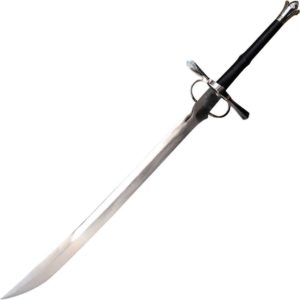
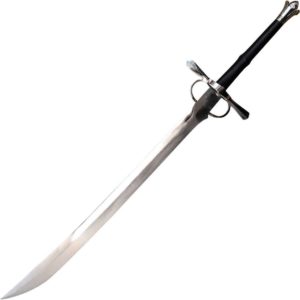
Ring Hilt Swiss Saber With Scabbard and Belt
SKU: DS-1353B Price range: $755.00 through $790.00 Add to Cart This product has multiple variants. The options may be chosen on the product page -
Ring Hilt Swiss Saber With Scabbard
SKU: DS-1353 Price range: $630.00 through $665.00 Add to Cart This product has multiple variants. The options may be chosen on the product page -
The Messer Sword With Scabbard and Belt
SKU: DS-1350B Price range: $680.00 through $710.00 Add to Cart This product has multiple variants. The options may be chosen on the product page -
The Messer Sword With Scabbard
SKU: DS-1350 Price range: $555.00 through $585.00 Add to Cart This product has multiple variants. The options may be chosen on the product page -
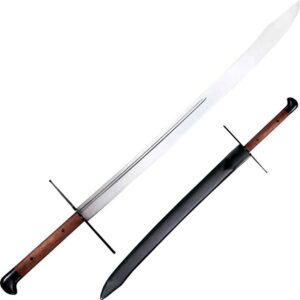

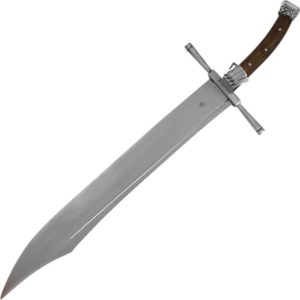
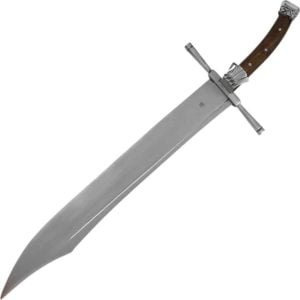

Medieval Europe times, a blend of brutality and romance, captivate us. Our collection of falchions at Medieval Collectibles invites you to immerse yourself in this bygone era.
Our falchions, ranging from cleaver to cusped designs, are hand-crafted and authentic replicas. Display them in your office, home, or medieval reenactments to showcase your passion as a warrior enthusiast or history hero.
Find the Perfect Cleaver Falchion Sword Now
Medieval Collectibles offers these swords at reasonable prices. Whether you seek a battle-ready or decorative piece, our falchions come in various styles to meet your needs. The falchion is a one-handed, single-edged sword with a curved blade that widens toward the middle and tapers toward the tip, similar to swords such as the saber and cutlass. It was designed primarily for powerful cutting and slashing motions
Enhance your falchion sword with the right fashion. Dress up as a European noble with our sword products, complete with a belt to look sharp. Enjoy dressing up as a guard from the period, often depicted with this sword as their default weapon.
Shop now to enhance your collection of medieval weaponry, armor, clothing, and accessories. Learn to wield these impressive pieces with confidence and authenticity.
Frequently Asked Questions
What is a falchion sword?
A falchion is a medieval, single-handed sword with a noticeable blade. The sharp weapon is notable for its quick slashing capabilities.
Originating in Europe, the name falchion may derive from the French word fauchon and the Latin falx, referring to a sickle, reflecting the overall length of the blade. Understanding the meaning behind this weapon’s design helps appreciate its historical significance.
Falchion swords, known for their unique non-straight design and classified among single-edged swords, are wider and heavier. This design for the entire sword allows for more weight in the strike, making the falchion effective for chopping and slashing. It delivers a powerful hit, much like a battle axe would against a target. When reversed, the blunt bevel could even be used for defensive maneuvers or to strike opponents to the ground.
The length of a falchion is more comparable to that of a cleaver, and it offers a different kind of functionality compared to thinner, lighter swords. While single-edged swords like the cutlass were favored by sailors and became popular in naval warfare from at least the 1700s onward, the falchion was a distinctive choice in medieval Europe for both foot soldiers and knights alike.
Are medieval falchions single-edged swords similar to a sax or scramasax?
Falchions, derived from the sax, are used against lighter armor in medieval art by infidels, footmen, and knights. They are entirely European. Some historians note visual similarities between the falchion and the Dark Ages seax, as both were single-edged blades, though the falchion emerged much later in the medieval period.
Some falchions resemble a large meat cleaver or machete, which were found in different forms across Western Europe from the 13th to the 16th century. These chopping weapons are similar in function to other contemporary war weapons.
Given their unique sword design, foes seeing this weapon’s edge won’t have any hope of resistance. The speed and grace with which a well-trained fighter could wield this sword made it formidable on the battlefield and changed the game of medieval warfare.
How is falchion pronounced?
There’s often confusion about how to pronounce falchion. Its known phonetic spellings are / fɔːltʃən / and / fȯl-chən /.
Who uses a medieval falchion?
The falchion was accessible to common soldiers and valued across social classes. Few other swords have survived, but those that have, like some ancient falchions, show their widespread use from footsoldiers to knights.
Both human footsoldiers and knights valued this weapon, as it required less skill to master than traditional swords while still being effective at killing opponents with weaker armor.
What does a one-handed falchion look like?
The falchion can resemble a meat cleaver instead of a traditional sword, with the most famous example being the Conyers Falchion. Past its hilt and pommel is a wide sword with a secondary bevel.
This sharp blade beyond the hilt differs from typical 14th-century sword designs and is said to inspire the vorpal blade in “Jabberwocky.” A tip for identifying authentic falchions is examining their curve and single-edged design, which could bring swift death to enemies in combat.
There are also the cleaver falchions and the cusped falchions. An example weapon is the Thorpe Falchion, which has a unique design that features a slightly curved blade, resembling German Messer knives forged in the fire of medieval smithies.
How authentic are falchion replicas online?
At Medieval Collectibles, we ensure our replicas are historically accurate, with dimensions and weight that reflect the original designs. Our medieval falchions meet the perfect balance for display, battle reenactments, and costume accessories.