
Scimitar Sword
-

-

-

-
-
-
-
-
-
-
-
-
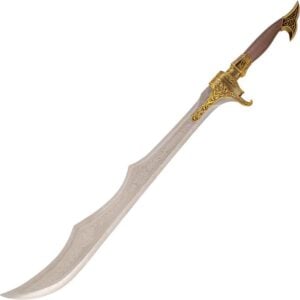
Fantasy Scimitar With Scabbard
SKU: DS-1370 Price range: $610.00 through $645.00 Add to Cart This product has multiple variants. The options may be chosen on the product page -
-
Fantasy Scimitar With Scabbard and Belt
SKU: DS-1370B Price range: $705.00 through $740.00 Add to Cart This product has multiple variants. The options may be chosen on the product page -
-
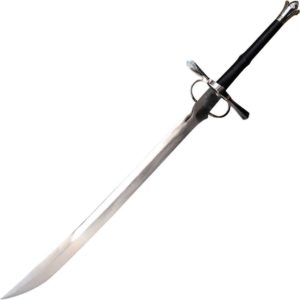
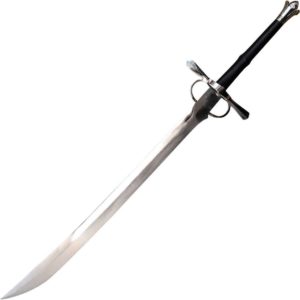
Ring Hilt Swiss Saber With Scabbard and Belt
SKU: DS-1353B Price range: $700.00 through $735.00 Add to Cart This product has multiple variants. The options may be chosen on the product page -
Ring Hilt Swiss Saber With Scabbard
SKU: DS-1353 Price range: $605.00 through $640.00 Add to Cart This product has multiple variants. The options may be chosen on the product page -
Elven High King Sword with Scabbard
SKU: DS-1554 Price range: $735.00 through $770.00 Add to Cart This product has multiple variants. The options may be chosen on the product page -
-
-
-
Elven High King Sword with Scabbard and Belt
SKU: DS-1554B Price range: $860.00 through $895.00 Add to Cart This product has multiple variants. The options may be chosen on the product page -


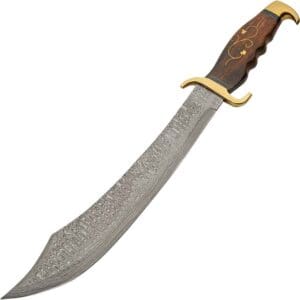
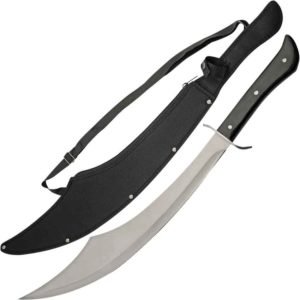


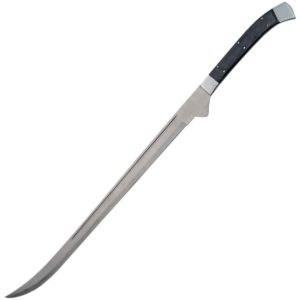
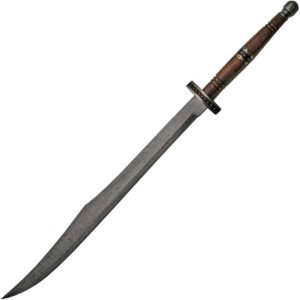
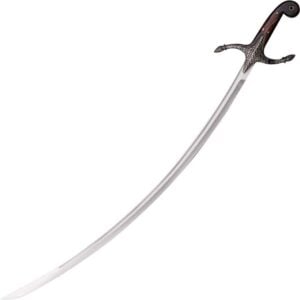
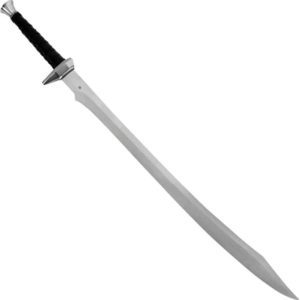
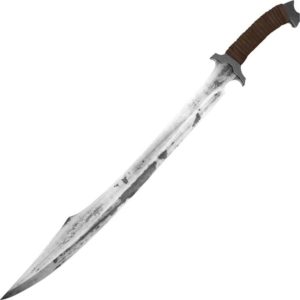
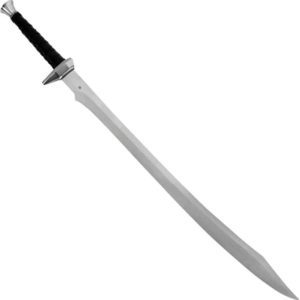


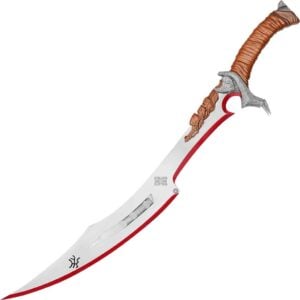

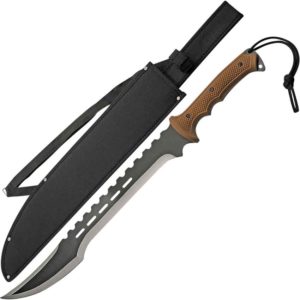
Whether you are a pirate, Saracen, or another exotic and enchanting character, you may wish to wield a single-edged sword like the scimitar. These legendary curved swords are associated with the enchanting desert sands, glittering oases, and skyscraping minarets of Arabia, Persia, and Northern Africa.
The word “scimitar” is widely believed to derive from the Persian “shamshir” (via European intermediaries like French and Italian forms), the name of a deeply curved, single-edged saber historically used in Persia and the Middle East.
Scimitars were originally introduced in Central Asia and adopted by many cultures across Asia, becoming iconic weapons of those lands.
In history, the scimitar appears as a symbol of power and grace, featured prominently from the centuries of medieval wars to day-to-day life in the Middle East. The curved blade form became a symbol of rank and military prowess throughout the region.
These curved swords were equally useful on horseback or foot, allowing warriors to dominate the battlefield. Designed for horse warfare, their curved convex edge could sweep through enemy armor with devastating efficiency.
They were essential weapons of the powerful Ottoman Empire, which conquered most of the Middle East, portions of Africa, and Europe.
Scimitars have been closely tied to Middle Eastern warriors or soldiers, such as the Arabs, Turks, and Persians. The Turkish variant, particularly the kilij, became legendary on horseback during battles of the past.
The sword’s design made for exceptionally powerful drawing cuts while maintaining a swift and nimble length, capable of piercing armor and striking an opponent’s head with precision.
Functional and Decorative Curved Blades
From functional to decorative swords, you will surely find something that interests you here in our collection. Our decorative scimitars look great hanging on a coat rack or displayed on a stand in your home or office, worthy of any museum collection.
Long admired by collectors and historians alike, these blades represent centuries of craftsmanship. Meanwhile, our fierce functional weapons are perfect for historical reenactments or adding a dramatic touch to your decor.
Wielded similarly to sabers or broadswords, scimitar swords have a distinct point for drawing cuts and motions in combat.
These swords are made for quick hits, making them effective in battle. The lightweight handle enables smooth control during use, while the weight is carefully balanced for ease and versatility.
Whether for martial practice or as a tribute to the warrior god of ancient legend, these blades embody timeless martial artistry.
Craftsmanship and Aesthetic Design of Curved Swords
These sword replicas, inspired by the historical making of scimitars, are shaped to perform well in reenactments or as collectible display pieces. Made from sturdy materials like stainless steel and high-carbon steel, each curved sword showcases breathtaking designs.
Whether you’re searching for the perfect scimitar for LARP, costume use, or display, you’ll want to read the detailed descriptions of each product in our collection.
Before you finalize your scimitar purchase, be sure to review all available options on our page to find the ideal scimitar tailored to your needs.
Frequently Asked Questions
What is the primary purpose of a scimitar sword?
Scimitar swords were historically designed for powerful, smooth drawing cuts, making them effective for both infantry and cavalry use. They are now cherished for reenactments, LARP events, and decorative purposes.
Do scimitars require special maintenance care?
Yes, it is recommended that metal blades be cleaned regularly, a light coat of oil applied to prevent rust, and stored in a cool, dry place.
What is the difference between a scimitar and a saber?
While scimitars and sabers share a curved blade design, scimitars are generally associated with Middle Eastern and Persian cultures, whereas sabers have European origins and were widely used by cavalry.