
Maces
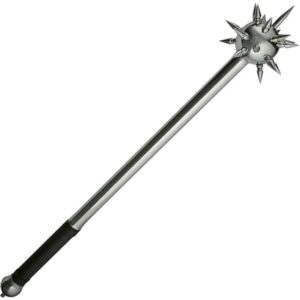
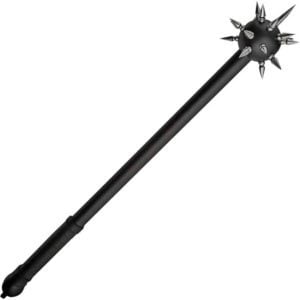

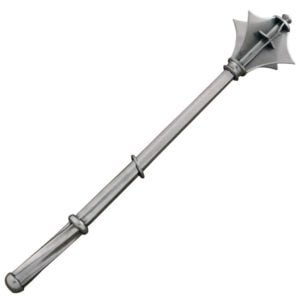
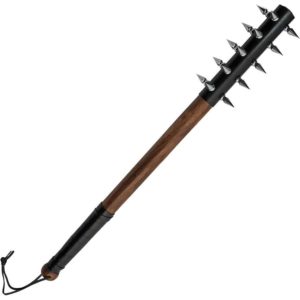

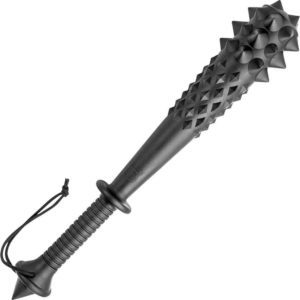

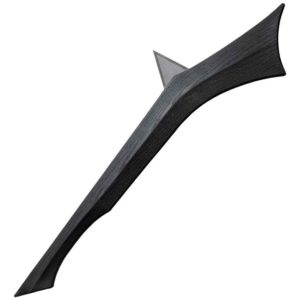
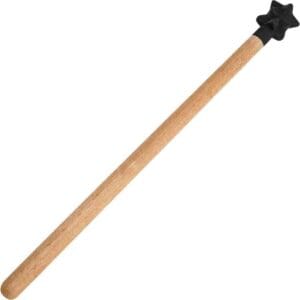
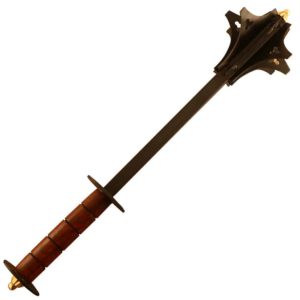


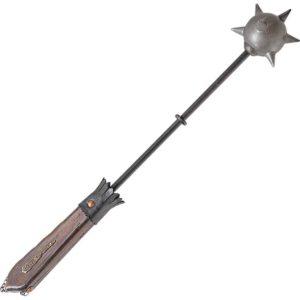

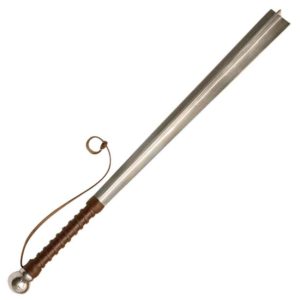
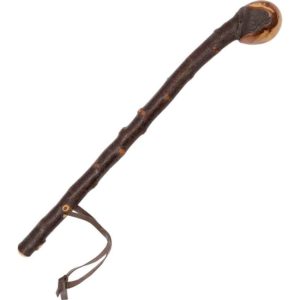
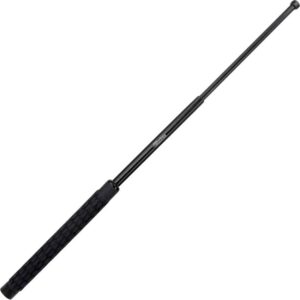
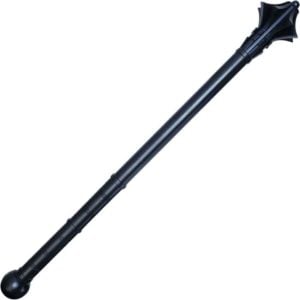

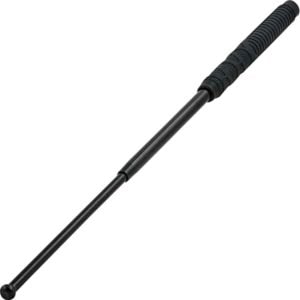
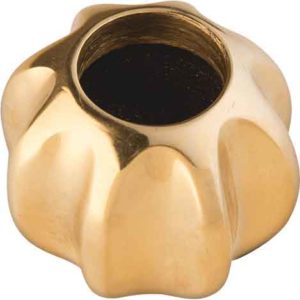

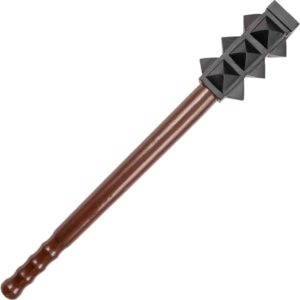

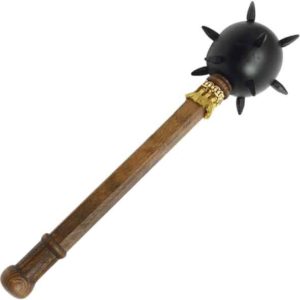
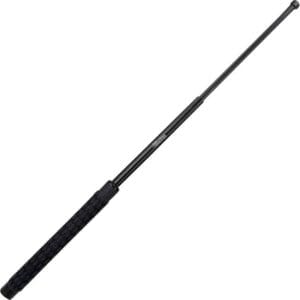
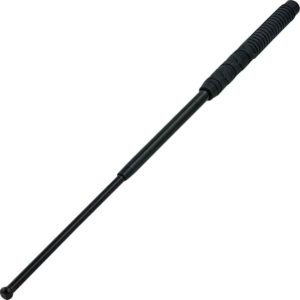
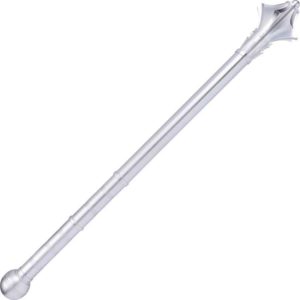


Maces were armor-fighting weapons that evolved from a steel ball on a wooden handle to an all-steel war club. From early maces to advanced designs, these striking weapons became essential medieval weapons for combat.
Here at Medieval Collectibles, we carry all sorts of styles of these blunt weapons, including flanged, shafted, spiked, and studded types. We also have them in various designs from popular culture shows and fantasy games, including ceremonial mace replicas.
The most common medieval maces were the pear-shaped mace, the six-flanged mace, or the eight-flanged mace. Medieval maces were commonly hung from the saddles of knights on horseback dressed in full plate armor as a secondary weapon.
It is one of the effective striking weapons used in battles. Compared to the slashing sword, a spiked mace can be pulled from the saddle to smash and bludgeon through an enemy’s shield or armor to disarm, incapacitate, or even kill them.
Browse our functional or decorative mace weapons found only here at Medieval Collectibles.
Frequently Asked Questions
What are medieval maces?
A mace weapon is a blunt armament with heads and a handle designed to deliver powerful blows. It is typically used for close combat, especially in the Middle Ages. Beyond their practical battlefield applications, maces also held symbolic significance among medieval nobility and clergy.
Maces evolved from the club during the early Middle Ages, but rather than just a large piece of stick, these formidable weapons had separate mace heads and handles. The mace head is made of stone or metal, including steel, bronze, iron, and copper, while the handle is made of wood or metal.
Some mace heads featured metal reinforcements to deliver even more powerful strikes that penetrate heavier plate armour, heavy armor, or break swords and other weapons. This aspect made them an effective striking weapon against armored opponents.
How long is a medieval mace?
There are many lengths available to serve the respective purposes of its users. Foot soldiers’ maces were short and were usually two or three feet long. Cavalrymen used longer maces so they could deliver strikes from horseback. Two-handed mace variants were even longer and larger.
How heavy is a medieval mace weapon?
These blunt weapons needed to be substantial to land powerful blows. The variety of maces used in the Middle Ages weighed differently. Medieval maces typically weighed between 1 kg and 1.8 kg (2-4 lbs), depending on their design, era, and materials.
Earlier field maces generally weighed 2-3 pounds, similar to contemporary swords, while some ornate examples could reach up to 4 pounds.