
Functional vs Decorative Replicas: A Comprehensive Guide for Medieval Collectors
Home » Glossary » Collecting & Replicas Hub » Getting Started with Historical and Fantasy Replica Collecting » Functional vs Decorative Replicas: A Comprehensive Guide for Medieval Collectors
Functional vs Decorative Replicas: A Comprehensive Guide for Medieval Collectors
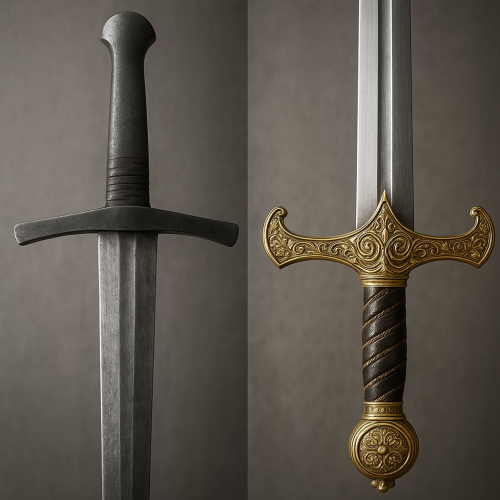
Introduction: Understanding the Difference Between Functional and Decorative Medieval Replicas
When entering the world of medieval collecting, one of the most crucial distinctions you’ll encounter is the difference between functional and decorative replicas. Whether you’re interested in swords, armor, or other medieval weapons, understanding this fundamental difference will help you make informed purchasing decisions that align with your collecting goals, budget, and intended use. As MedieWorld’s comprehensive analysis explains, this knowledge is essential for any medieval enthusiast.
In this article we are going to have a look at the functional sword and the decorative sword and explain the key differences between them. This distinction extends beyond swords to encompass all types of medieval replicas, from full suits of armor to battle axes and shields. As noted by Reliks.com’s comprehensive guide, understanding these differences is essential for making informed purchasing decisions.
Functional vs Decorative Replicas: Feature Comparison Chart
Comprehensive Feature Comparison
Feature | DECORATIVE REPLICAS | FUNCTIONAL REPLICAS |
PRIMARY PURPOSE | Display & visual appeal only | Active use: combat, training, cutting |
BLADE MATERIAL | Stainless steel (440, 420) | High carbon steel (1045, 1060, 1095, 5160) |
CONSTRUCTION | Cast or pressed from molds | Hand-forged with proper heat treatment |
TANG TYPE | Rat-tail or welded tang | Full tang or 3/4 tang (peened/threaded) |
EDGE | Never sharpened, often fake edge | Can be sharpened, properly tempered edge |
FLEXIBILITY | Rigid and brittle – will break | Properly tempered – flexes and returns |
WEIGHT | Often too heavy or too light | Historically accurate (2-4 lbs for swords) |
BALANCE | Poor balance point | Properly balanced for handling |
PRICE RANGE | $15 – $300 | $200 – $1000+ |
MAINTENANCE | Minimal – dust occasionally | Regular oiling and inspection required |
SAFETY FOR USE | DANGEROUS if swung or struck | Safe for intended purpose with training |
LONGEVITY | Lasts if undisturbed | Generations with proper care |
RESALE VALUE | Minimal | Retains value well |
WARRANTY | Usually none | Often includes warranty |
Material Specifications
Steel Type | Decorative Use | Functional Use | Key Properties |
Stainless Steel | ✓ Primary choice | ✗ Never | Corrosion resistant, brittle |
1045 Carbon | Sometimes | ✓ Entry level | Medium carbon, affordable |
1060 Carbon | Rarely | ✓ Standard | Good balance of hardness/flexibility |
1095 Carbon | Never | ✓ Premium | High carbon, excellent edge retention |
5160 Spring | Never | ✓ Premium | Superior flexibility and durability |
Damascus | ✓ For appearance | ✓ When properly made | Aesthetic appeal, varies in function |
Construction Details
Component | Decorative | Functional |
Handle Assembly | Glued or loosely fitted | Tightly fitted, often wrapped |
Guard | Often loose or wobbly | Solidly attached, no movement |
Pommel | Decorative, may be hollow | Functional counterweight, peened |
Blade Thickness | Inconsistent | Proper distal taper |
Heat Treatment | None | Differentially hardened (HRC 48-58) |
Finish | Chrome or mirror polish | Satin or working finish |
Armor Comparison
Feature | Decorative Armor | Functional Armor |
Mobility | Static display only | Fully articulated |
Materials | Thin steel or aluminum | 14-16 gauge steel minimum |
Weight | Varies (often too light) | 45-65 lbs full suit |
Joints | Fixed or minimal movement | Properly articulated |
Strapping | Basic or decorative | Reinforced leather/buckles |
Protection | None | Actual impact protection |
Sizing | One-size or limited | Custom fitted available |
LARP Weapon Specifications
Feature | Standard LARP | Professional LARP |
Core | Fiberglass rod | Carbon fiber |
Foam | Open cell (budget) | Closed cell EVA |
Coating | Cloth tape | Latex or Plastidip |
Tip Safety | Basic foam | Reinforced safety tip |
Durability | 6-12 months | 2-5 years |
Weight | Very light | Balanced for realism |
Cost Analysis
Category | Initial Cost | 5-Year Cost | Value Retention |
Decorative Sword | $50-$200 | $50-$200 | 10-20% |
Functional Sword | $300-$800 | $350-$850* | 60-80% |
LARP Weapon | $50-$150 | $150-$450** | 30-40% |
Decorative Armor | $200-$800 | $200-$800 | 20-30% |
Functional Armor | $1000-$5000 | $1200-$5200* | 70-85% |
*Includes maintenance supplies **Assumes replacement every 2 years
Usage Guidelines
Activity | Decorative | Functional | LARP | Stage Combat |
Wall Display | ✓ Ideal | ✓ Yes | ✓ Yes | ✓ Yes |
Costume/Cosplay | ✓ Light use | ✓ Yes | ✓ Ideal | ✓ Yes |
Photography | ✓ Perfect | ✓ Yes | ✓ Yes | ✓ Yes |
Training/Practice | ✗ Dangerous | ✓ Yes | ✗ No | ✓ Yes |
Test Cutting | ✗ Will break | ✓ Designed for | ✗ No | ✗ No |
Sparring | ✗ Dangerous | ✓ With protection | ✓ Ideal | ✓ Yes |
Full Contact | ✗ Will break | ✓ Armored only | ✓ Yes | ✓ Choreographed |
Competition | ✗ Not allowed | ✓ Yes | ✓ LARP events | ✓ Theatrical |
Quick Decision Guide
Choose DECORATIVE if you:
- Only want to display
- Have budget under $200
- Never plan to swing it
- Want minimal maintenance
- Prioritize appearance over function
Choose FUNCTIONAL if you:
- Plan any physical use
- Want historical accuracy
- Consider it an investment
- Participate in martial arts
- Value craftsmanship
Choose LARP if you:
- Need safe combat options
- Participate in live roleplay
- Want lightweight weapons
- Prioritize safety
- Need affordable combat gear
Choose STAGE COMBAT if you:
- Perform choreographed fights
- Need durable training weapons
- Require consistent balance
- Work in theater/film
- Need professional equipment
The Fundamental Differences: Form vs Function
Decorative Replicas: Beauty for Display
Display swords, often referred to as replicas or decorative pieces, are designed primarily to serve as ornamental objects. According to Sword Slice’s detailed comparison, these pieces prioritize:
- Visual Appeal: Intricate engravings, ornate handles, and elaborate scabbards
- Cost-Effectiveness: Generally more affordable than functional pieces
- Low Maintenance: Often made with corrosion-resistant materials
- Safety: Designed for display only, not for any physical use
Functional Replicas: Built for Action
Functional swords are replicas designed for real use in combat, training, or historical reenactment. Medieval-Shop.co.uk explains that these weapons feature:
- Durability: Made to withstand impacts and demanding movements
- Proper Balance: Carefully weighted for authentic handling
- Safety Features: Appropriate for their intended use (blunt edges for combat, sharp for cutting practice)
- Historical Accuracy: Often more faithful to original specifications

Swords: The Most Popular Medieval Replicas
Material Differences: The Foundation of Functionality
Decorative Sword Materials
The decorative sword will normally be made with a stainless steel blade because its purpose is to be a display piece and stainless steel offers corrosion resistance and low maintenance. As detailed by Sword N Armory’s technical guide, key characteristics include:
- Stainless Steel Construction: Stainless steel is highly corrosion resistant, so your decorative sword will look beautiful and last for several years.
- Cast Manufacturing: Stainless steel is cast from a mold, rather than formed.
- Brittleness: However, under stress, stainless can break or shatter.
Functional Sword Materials
High carbon steel swords are usually functional swords. According to Medieval Collectibles’ detailed guide, these weapons feature:
- Carbon Steel Construction: Various grades including 1045, 1060, 1095, and spring steels like 5160 or 9260
- Forged Manufacturing: The functional sword today is forged from a very pure high carbon steel which no longer lacks strength because of the impurities.
- Heat Treatment: When looking at a sword on our site, you may see the words tempered, hardened, or heat-treated.
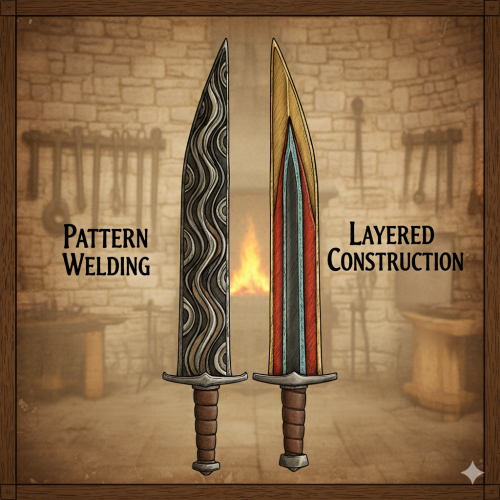
Tang Construction: The Hidden Strength
Decorative Sword Tangs
Most decorative blades are built with a stick or rat-tail tang, a narrow piece of metal that threads through the pommel into the handle to make it possible to grasp and swing the blade. HanBon Forge warns that these tangs:
- Are welded to the blade shoulder
- Sufficient only for display purposes
- The rat-tail or stick tang design fails under repeated use and could be very dangerous to the wielder or anyone else within the blades flight path when the rod lets go of the blade.
Functional Sword Tangs
A full tang means that the blade continues all the way through the handle. As explained by SwordsSwords.com’s comprehensive guide, functional tangs include:
- Full Tang: Extends through the entire handle
- 3/4 Tang: Common in Japanese swords, nearly as wide as the blade
- Peened or Threaded: Secure attachment methods
- The tang of a functional blade is often hot peened to the handle.

Flexibility and Tempering: The Soul of a Functional Blade
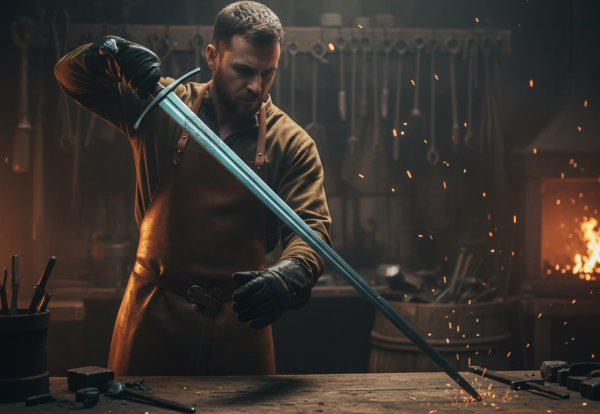
Production of a functional sword blade requires an experienced blade smith with a great knowledge of metallurgy. According to Kult of Athena’s specifications, the tempering process creates:
- Proper Flex: The smith will temper a functional blade so it will flex and return to its true shape.
- Differential Hardening: Japanese swords feature hard edges and flexible spines
- Historical Weight: Most historically accurate functional swords weigh no more than 2-3 lbs.
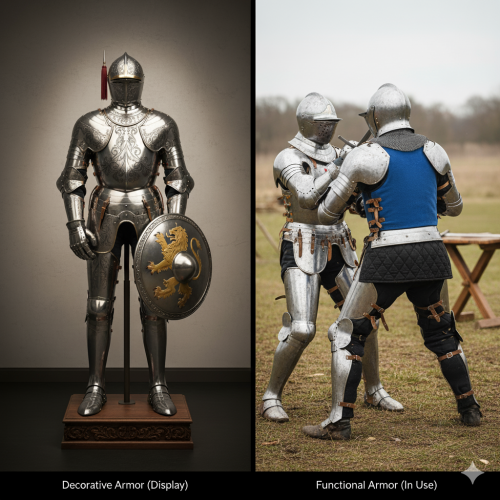
Armor: From Display Pieces to Battle-Ready Protection
Decorative Armor
The purpose of a decorative armour will mainly be enjoy of it in a visual way, without giving it any funcional use. As explained by Medieval-Shop’s armor guide, characteristics include:
- Static Design: The decorative armour is static, like an statue; is a decorative object wiht no fixed function.
- Display Quality: Perfect for castle displays or medieval-themed rooms
- Lower Cost: Generally more affordable than functional pieces
- Aesthetic Focus: Emphasis on appearance rather than protection
Functional Armor
The first one is used to take part in tournaments, amusement activities, combats or medieval festivals. ArmStreet’s functional armor collection demonstrates features including:
- Articulated Construction: Nowadays we are still using those magnificient functional armours for full contact medieval combats, they usually are made of steel plaques joined by hooks, nuts, latches, and nails attached to the warrior by belts and buckles.
- Weight Considerations: An entire armour is made up of multiple articulated pieces, which may arrive to be 250 with a weight of 25-30 kg approximately.
- Safety Testing: Functional armours in medieval combats must pass several tests to evalute its resistance.
LARP-Safe Replicas: Modern Safety Meets Medieval Aesthetics
Construction and Materials
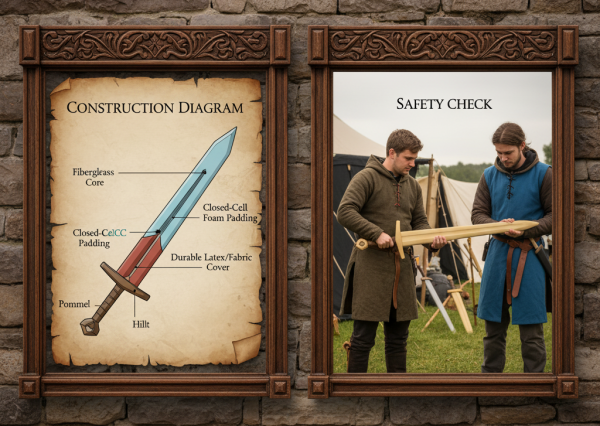
EVA foam is an excellent choice for LARP weapons because it’s lightweight, robust and tear-resistant. According to Medieval Ware’s comprehensive LARP weapon guide, LARP weapons feature:
- Foam Core Construction: Closed-cell foam like EVA or high-density foam
- Flexible Cores: Carbon fiber or fiberglass rods for structure
- Latex Coating: For durability and realistic appearance
- Safety Tips: our LARP swords are all fitted with a carbon-fiber safety tip. Foam Kings and other manufacturers prioritize these safety features.
Safety Standards
Firstly, there is no universal standard for LARP safety. That means every country, state, group or game has different guidelines to what they consider safe. LARP Inn’s safety guide outlines common requirements including:
- Minimum foam thickness (usually 10mm)
- Secure handle construction
- No exposed cores
- Regular safety inspections
Stage Combat and Reenactment Weapons: The Middle Ground
Design Philosophy
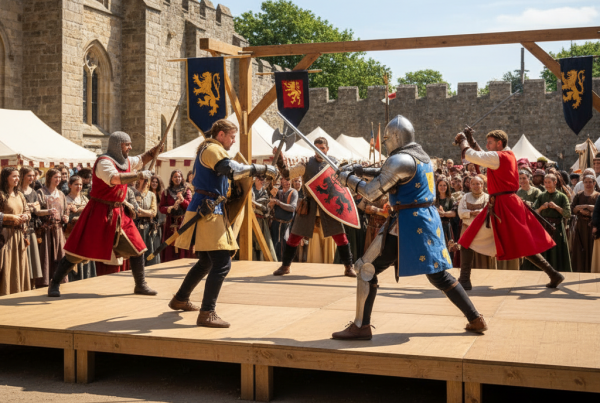
Battle-ready swords are specially designed replicas serving a unique purpose in historical reenactment and stage combat. As described by Battle-Merchant’s detailed guide, these weapons:
- Balance Authenticity and Safety: These swords closely resemble historical weapons while incorporating modern safety features.
- Blunt Edges: Rounded or unsharpened for safe contact
- Reinforced Construction: Built to withstand blade-to-blade contact
- Historical Accuracy: Often based on museum pieces
Special Categories
According to Darksword Armory’s specifications, specialized combat replicas include:
- Sport Combat Swords: Sport combat swords feature extra strong tangs and thick blades with thick edges.
- HEMA Weapons: Designed for Historical European Martial Arts practice
- SCA Approved: Meeting Society for Creative Anachronism standards
- Stage Steel: Professional theatrical weapons
Choosing the Right Replica for Your Needs
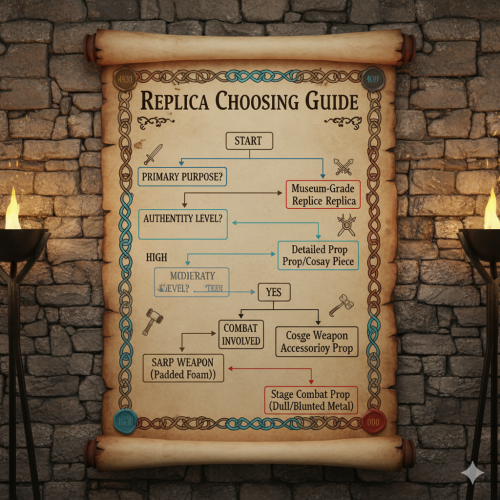
For Display and Collection
Choose decorative replicas if you:
- Want to display pieces on walls or in cases
- Are working with a limited budget
- Prefer low-maintenance options
- Value intricate decorative details
- Never intend to handle the pieces roughly
For Active Use
Choose functional replicas if you:
- Participate in historical reenactments
- Practice martial arts or HEMA
- Want to perform cutting tests
- Value historical accuracy in weight and balance
- Consider the piece an investment
For LARP and Cosplay
Choose LARP-safe replicas if you:
- Participate in live-action roleplay events
- Need safe weapons for contact scenarios
- Want lightweight, easy-to-carry options
- Prioritize safety over historical accuracy
Safety Considerations and Best Practices
General Safety Rules
- Know Your Equipment: Understanding whether a sword is functional and for what purpose it is used is important to ensuring that you are satisfied with your sword. Sword Buyers Guide provides extensive reviews to help identify quality pieces.
- Regular Inspections: Check for damage before each use
- Appropriate Protection: Always wear proper safety gear
- Proper Training: Seek instruction before using functional weapons
- Storage Safety: Keep all replicas secure and away from untrained individuals
Warning Signs
Battle ready swords are more expensive due to their durability, whereas decorative swords are more affordable, appealing to casual collectors. SwordsDirect’s buyer’s guide warns to be cautious of:
- Suspiciously cheap “battle ready” items
- Stainless steel marketed as functional
- Missing specifications or vague descriptions
- No mention of tang construction

Care and Maintenance
Decorative Replicas
- Dust regularly with soft cloth
- Apply furniture polish for shine
- Store in dry conditions
- Minimal maintenance required
Functional Replicas
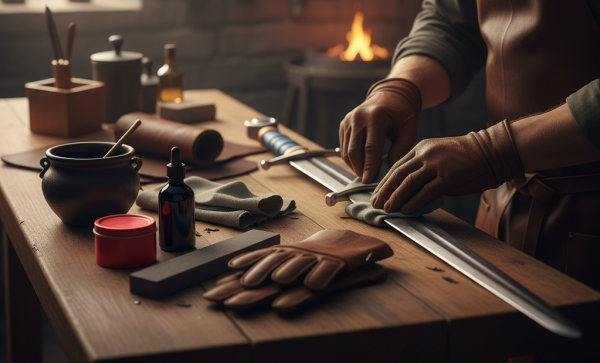
As recommended by Zetanmedieval’s maintenance guide, proper care includes:
- Applying a light coat of oil before storage for metal armor can help prevent rust, especially on a knight suit comprising intricate plates and arms.
- Clean after each use
- Oil carbon steel regularly
- Check for loose components
- Professional maintenance for heavy use
Investment Value and Long-Term Considerations
Cost Analysis
While more expensive, functional swords are durable and can last for generations with proper care. As noted by Outfit4Events’ pricing guide, consider:
- Initial Investment: Functional pieces cost 2-5x more than decorative
- Longevity: Functional pieces last longer with proper care
- Resale Value: Well-maintained functional pieces retain value better
- Versatility: Functional pieces can serve multiple purposes
Building a Collection
Start with:
- One quality functional piece in your area of interest
- Decorative pieces to fill out displays
- Gradually upgrade decorative pieces to functional
- Specialize in a particular period or type
Conclusion: Making the Right Choice
Understanding the difference between functional and decorative medieval replicas empowers you to make informed decisions that align with your interests, budget, and intended use. Whether you’re drawn to the aesthetic beauty of decorative pieces or the authentic feel of functional replicas, there’s a place for both in the world of medieval collecting.
Remember:
- Decorative replicas are perfect for display and visual enjoyment
- Functional replicas offer authenticity and versatility for active use
- LARP-safe replicas provide the best of both worlds for safe combat scenarios
- Stage combat weapons bridge the gap between authenticity and safety
As you build your collection, consider starting with pieces that match your primary interest, then expanding to explore other categories. The medieval collecting community values both beautiful displays and functional authenticity – the choice is yours to make.

Quick Reference Guide
Decorative Replicas
- Materials: Stainless steel, cast construction
- Tang: Rat-tail or welded
- Price: $
- Use: Display only
- Maintenance: Low
Functional Replicas
- Materials: Carbon steel, forged construction
- Tang: Full or 3/4 tang
- Price: $$$
- Use: Combat, training, cutting
- Maintenance: Regular
LARP Replicas
- Materials: Foam and latex
- Core: Carbon fiber or fiberglass
- Price: $$
- Use: Safe combat roleplay
- Maintenance: Moderate
Stage Combat
- Materials: Carbon steel, blunt edges
- Tang: Reinforced full tang
- Price: $$-$$$
- Use: Choreographed combat
- Maintenance: Regular
Additional Resources
For more detailed information about medieval replicas, visit these reputable sources:
- Museum Replicas – Extensive collection of armor and weapons
- Medieval Collectibles – Comprehensive sword categorization
- Calimacil – Leading LARP weapon manufacturer
- Steel Mastery – Custom armor specialists
- Combat Reenactment Wikipedia – Historical context and modern practices
- Andracor – Extensive LARP and medieval weaponry
- Knights Edge Stage Steel – Professional stage combat weapons
This guide is part of the Medieval Collectibles comprehensive glossary. For more information on specific types of weapons, armor, and collecting tips, explore our other detailed guides in the Collecting & Replicas Hub.