Collecting & Replicas Hub
The Complete Guide to Collecting Historical and Fantasy Replicas
Welcome to the ultimate resource for collectors of historical and fantasy replicas. Whether you’re a seasoned collector with an extensive armory or just beginning your journey into the fascinating world of weapon replicas, this comprehensive guide will help you make informed decisions, protect your investments, and build a collection you can be proud of.
Why Collect Historical and Fantasy Replicas?
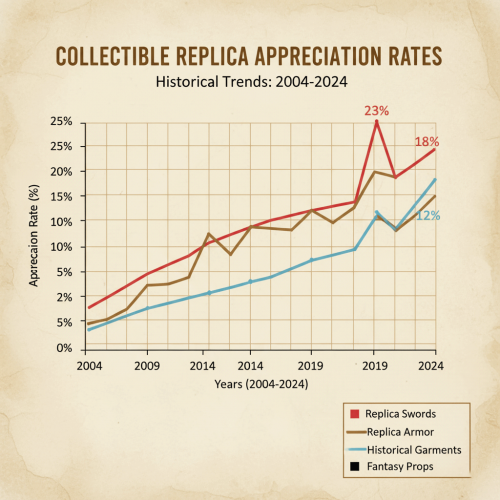
Collecting replica weapons connects us to history in a tangible way. Antique weapons have been highly collectible for centuries and only major economic downturns have much negative impact on prices. Unlike fleeting collectible trends, historical replicas offer both aesthetic enjoyment and financial appreciation. Antique swords in particular have at least doubled in value over the last 10 years or more, perhaps quadrupled in value over the last 20 years, and are certain to keep on appreciating.
The global collectibles market demonstrates impressive growth potential. The global collectibles market size was estimated at USD 294.23 billion in 2023 and is projected to reach USD 422.56 billion by 2030, growing at a CAGR of 5.5% from 2024 to 2030. This growth is driven by both emotional connections to historical items and their recognition as viable investment assets.
Understanding Types of Replicas
Functional vs. Decorative Replicas
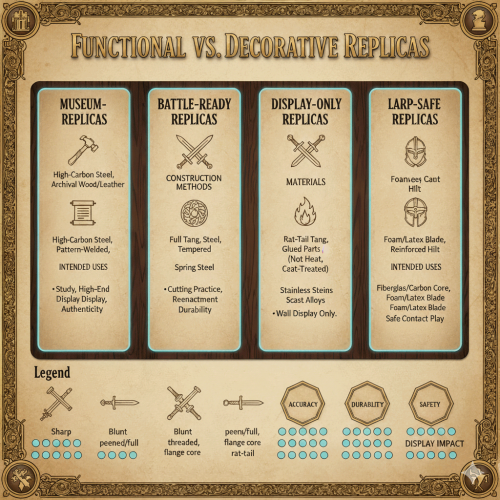
The replica market offers various categories to suit different collecting goals:
- Museum-Quality Replicas: These pieces prioritize historical accuracy and craftsmanship, often working with museums and scholars to ensure authenticity
- Battle-Ready Replicas: “Battle Ready” swords are functional weapons that will live up to actual combat usage. They are closest to historic examples in the fact that when properly sharpened they can perform
- Display-Only Pieces: Designed for visual impact rather than functionality
- LARP-Safe Replicas: Specially designed for Live Action Role Playing with safety features
Identifying Quality Replicas
Key Quality Indicators
When evaluating a replica, consider these essential factors:
Materials and Construction
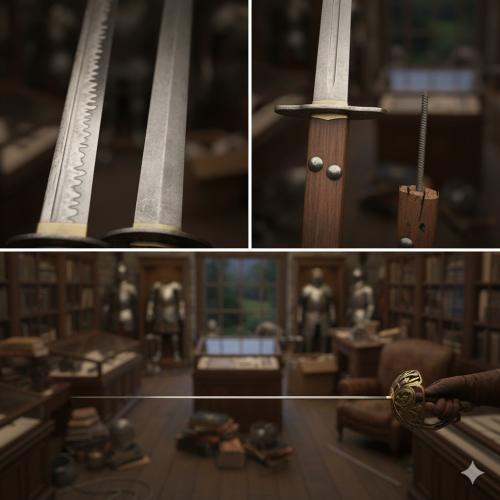
- The best material for a high-quality replica sword is typically stainless steel, carbon steel, or Damascus steel
- The blades are usually made of carbon steel, as opposed to the more brittle stainless steel and feature longer and stronger tangs
- Look for full-tang construction in functional pieces
Authenticity Markers
- A real hamon will show tiny dots/specks (nioi and/or nie) along and between the border of the hamon and the rest of the blade. An etched temper line will be seen as a smooth cloud lacking any internal features
- Low-quality or fake swords often have small design mistakes, such as uneven patterns, messy engravings, or incorrect historical details
Weight and Balance
- Quality replicas should feel properly balanced
- Our swords are historically accurate and beautiful pieces, but above all they are working tools and are constructed and weighted to reflect that
Selecting Reputable Sellers
What to Look for in a Legitimate Seller
Established manufacturers with strong reputations include:
- Arms & Armor has worked with museums, collectors, and scholars to develop a deep understanding of European weapons
- Tod’s sword scabbards are known for the quality of their manufacture, the fittings used and the perfect fit of the harness
- Companies like Museum Replicas, which has been Serving since 1985
Red Flags to Avoid
- Unrealistic pricing (too good to be true)
- Lack of detailed specifications
- No clear return policy or warranty
- Fake swords are often made from low-grade materials, such as poor-quality steel, aluminium, or plastic
Legal Considerations for Collectors
Understanding Replica Weapon Laws
Legal requirements vary significantly by location:
United States Federal Law
- The Consumer Product Safety Commission may provide for an alternate marking or device for any toy, look-alike, or imitation firearm
- no State shall prohibit the sale or manufacture of any look-alike, nonfiring, collector replica of an antique firearm developed prior to 1898
International Considerations
- Articles 34 and 36 TFEU and Regulation (EC) No 764/2008 already facilitate the free movement of these products within the EU, while taking account of the security concerns of the Member States
- It is an offence to possess an imitation firearm in a public place unless the person can prove they have lawful authority or a reasonable excuse

Transportation and Import Regulations
- Always check local and international laws before purchasing
- Some jurisdictions require special permits for importing replica weapons
- Please be sure to check it is legal for you to import a sword of this nature into your country as we cannot be responsible if swords are returned
Proper Storage and Display
Climate Control Requirements
Maintaining proper environmental conditions is crucial:
Temperature and Humidity
- Keep humidity between 45-55% and temperature around 18-20°C
- Relative humidity should not drop below 40% or rise above 70%
- Ideally, you should store or display your sword collection in an environment that has about 30% humidity level to avoid rust or corrosion
Display Considerations
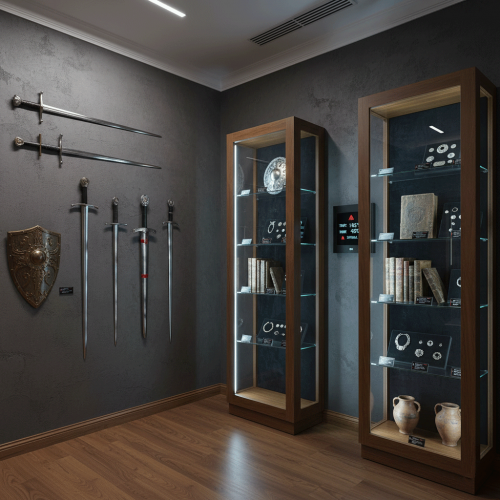
- Avoid placing displays in direct sunlight or high-humidity areas to protect the sword and its finish
- UV light causes three main problems. First, it makes colors fade and materials like leather, wood, and metal break down
Maintenance Best Practices
Regular maintenance ensures longevity:
Cleaning and Protection
- Clean your sword blade and fittings every 6 months if you are simply displaying your sword
- Clean and oil your blade after every use, whether used for reenactment combat, cutting tests, or simple training
- It’s basically essential that you use a specialized wax or oil made just for swords, which are uniquely effective at keeping rust away
Storage Guidelines
- Do not store your sword in its scabbard for extended periods (30 days or more)
- Cloth traps moisture, and moisture is the enemy of metal as it leads to rust
- The material used for the shirasaya, magnolia wood, is sensitive to humidity and absorbs moisture from the blade, so a Japanese sword in the shirasaya is less likely to rust
Building Your Collection
Setting a Focus
One of the first steps in choosing the right historical replica is understanding your personal historical interests. Consider:
- Which historical period fascinates you most?
- Do you prefer weapons or defensive items like armor?
- Are you interested in specific cultures or regions?
- Is your focus on display or functional pieces?
Investment Considerations
The replica market offers strong investment potential:
Market Trends
- The increasing recognition of collectibles as viable investment assets has significantly boosted demand
- The collectibles market in the U.S. is expected to grow at the fastest CAGR of 4.8% from 2024 to 2030
Value Factors
- Limited edition pieces
- Artist-signed works
- Historical provenance or connection
- Condition and completeness
- Rarity and demand
Community and Resources
Connecting with Other Collectors
Building relationships within the collecting community provides:
- Access to private sales and trades
- Knowledge sharing and authentication help
- Information about upcoming releases
- Group buying opportunities for better prices
Educational Resources
- Museum exhibitions and demonstrations
- Historical reenactment groups
- SCA (Society for Creative Anachronism) events
- Online forums and collector associations
- Authentication services and expert appraisers
Specialized Collecting Areas
By Historical Period
- Medieval: Knights’ swords, armor, and weapons
- Renaissance: Rapiers, early firearms, and decorative pieces
- Viking Age: Axes, swords, and shields
- Asian: Katanas, dao, and traditional armor
- Military History: Specific conflicts or time periods
By Media Franchise
- Fantasy Literature: Lord of the Rings, Game of Thrones
- Video Games: Elder Scrolls, The Witcher, World of Warcraft
- Anime/Manga: Authentic Japanese-style replicas
- Film Props: Screen-accurate reproductions
Practical Use Considerations
Safety Guidelines
- Even heavy replica swords have a cutting edge and should be handled carefully
- Always wear appropriate protective gear for training
- Understand the difference between display and functional pieces
- Follow local laws regarding public display or transport
Training and Practice
- Many replicas are suitable for Historical European Martial Arts (HEMA)
- Stage combat and theatrical use require specific safety features
- LARP events have their own safety standards
- Regular maintenance is essential for pieces used in practice
Caring for Your Collection
Insurance and Documentation
- Photograph each piece from multiple angles
- Keep receipts and certificates of authenticity
- Consider specialized collectibles insurance
- Maintain an inventory with current values
- Use the information gained from monitoring to work out where and how to display sensitive items from your collections
Long-term Preservation
- Create stable micro-climates for sensitive pieces
- Use archival-quality storage materials
- Implement regular inspection schedules
- Plan for proper handling procedures
Getting Started
Ready to begin or expand your collection? Start by exploring our comprehensive subpages:
- [Getting Started Guide] – First steps for new collectors
- [Quality Assessment] – Detailed authentication techniques
- [Vendor Directory] – Verified sellers and manufacturers
- [Legal Resources] – State and country-specific regulations
- [Storage Solutions] – Equipment and best practices
- [Investment Guide] – Market analysis and trends
- [Community Hub] – Forums, events, and associations

Remember: The joy of collecting comes not just from the objects themselves, but from the knowledge gained, the history preserved, and the community connections made along the way. Whether you’re drawn to the historical accuracy of a medieval longsword or the fantasy appeal of a movie replica, each piece in your collection tells a story worth preserving.