
Common Beginner Mistakes in Replica Collecting
Home » Glossary » Collecting & Replicas Hub » Getting Started with Historical and Fantasy Replica Collecting » Common Beginner Mistakes in Replica Collecting
Common Beginner Mistakes in Replica Collecting
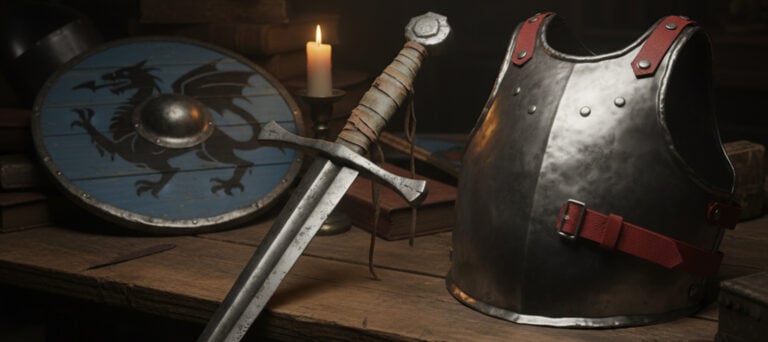
When starting a collection of historical replicas, fantasy weapons, or medieval reproductions, newcomers often make predictable errors that can lead to disappointment, wasted money, or even safety concerns. Understanding these common pitfalls can help you build a collection that brings lasting satisfaction and value.
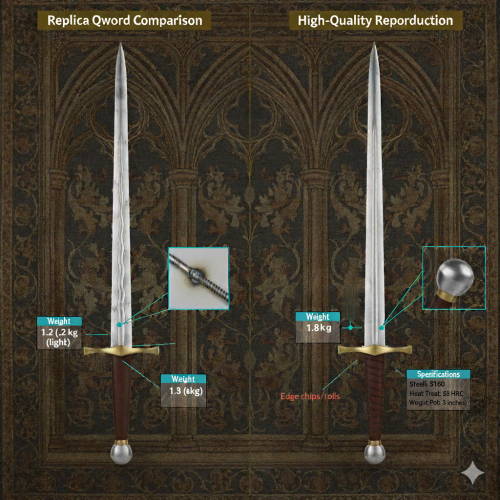
Prioritizing Price Over Quality
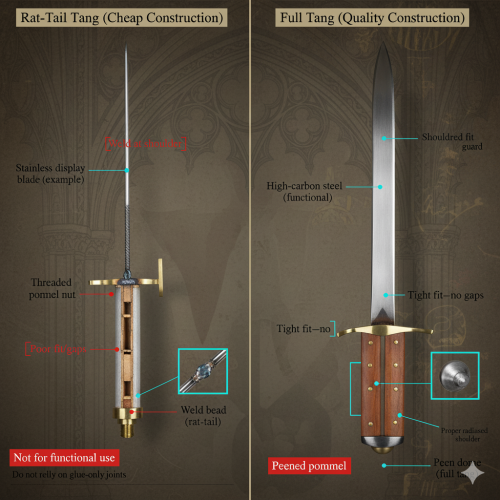
- Stainless steel instead of carbon steel (in functional pieces)
- Rat-tail tang construction that can fail under stress
- Poor heat treatment or no heat treatment at all
- Thin, lightweight construction that feels insubstantial
- Rough finishing with visible grinding marks or uneven surfaces
Neglecting Research Before Purchase
Many beginners purchase replicas based solely on appearance without understanding what they’re buying. This leads to mismatched expectations and disappointment when the item arrives.
Essential research should include:
- Historical accuracy of the design (if that matters to you)
- Intended use (display, stage combat, light cutting practice)
- Steel type and specifications
- Construction methods and materials
- Manufacturer reputation and track record
- Weight and balance specifications
The Victoria and Albert Museum’s arms collection provides excellent reference materials for understanding historical pieces. The Association for Renaissance Martial Arts (ARMA) offers resources on weapon characteristics and historical accuracy.
Ignoring Safety Considerations
Beginners sometimes fail to recognize that even decorative replicas require safe handling and storage. Sharp edges, pointed tips, and significant weight create genuine hazards if not properly managed.
Common safety oversights include:
- Storing weapons within reach of children or pets
- Handling sharp replicas without understanding proper grip techniques
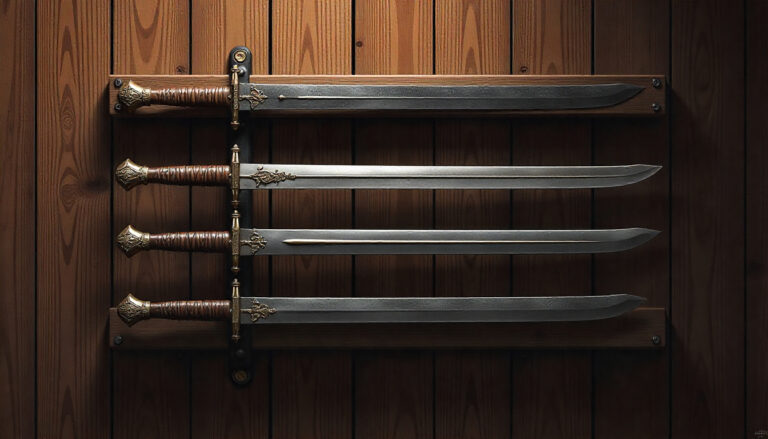
- Displaying pieces in unstable wall mounts or stands
- Attempting test cuts or swings in inappropriate spaces
- Failing to secure blade edges during transport
Even decorative pieces should be stored securely and handled with respect for their potential to cause injury. The American Alliance of Museums provides guidelines for safe collection storage that apply to private collections as well.
Confusing Decorative and Functional Replicas
- Often use stainless steel or zinc-aluminum alloys
- May have rat-tail tangs or no tang at all
- Designed purely for visual appeal
- Cannot withstand stress or impact
- Typically much less expensive
- Use properly heat-treated carbon steel
- Feature full or substantial tangs
- Designed to handle actual use (within limits)
- Can support the item’s own dynamic weight
- Command higher prices for quality construction
Overlooking Proper Maintenance Requirements
Beginners often assume that replicas, especially stainless steel pieces, require no maintenance. This misconception leads to tarnish, rust, corrosion, and deterioration.
Carbon steel weapons require regular care:
- Light oil coating to prevent rust (mineral oil or specialized weapon oil)
- Periodic inspection for rust spots or damage
- Proper storage in climate-controlled environments when possible
- Immediate cleaning after handling (skin oils cause corrosion)
Even stainless steel and decorative pieces benefit from:
- Regular dusting to prevent buildup
- Occasional cleaning of handles and guards
- Checking mounting hardware for security
- Protecting from excessive humidity
The National Park Service Museum Handbook offers guidance on preserving metal objects that applies to private collections as well.

Buying Without Considering Display Space
Enthusiasm often leads beginners to purchase pieces without considering where they’ll be displayed or stored. A five-foot claymore or full suit of armor requires significant space.
Before purchasing, consider:
- Available wall space and weight-bearing capacity
- Stand or rack requirements for larger pieces
- Climate control in display area
- Protection from direct sunlight (fades leather and wood)
- Security measures for valuable pieces
- How pieces will work together visually
The Museum of London has published resources on displaying arms and armor that provide useful principles for home collectors.
Falling for Fantasy Marketing
Manufacturers and sellers sometimes use misleading marketing language that creates unrealistic expectations. Terms like “battle-ready,” “hand-forged,” or “authentic” may not mean what beginners assume.
Questionable marketing includes:
- “Battle-ready” pieces that can’t safely withstand actual use
- “Hand-forged” items that were only hand-finished
- Claims of ancient authenticity for obvious reproductions
- Inflated material claims (Damascus steel, Toledo steel)
- Misleading historical attributions
Critical evaluation of marketing claims requires checking:
- Specific steel types and specifications
- Actual construction methods described in detail
- Manufacturer’s reputation among experienced collectors
- Independent reviews from collector communities
- Return and warranty policies
The Society for Creative Anachronism (SCA) maintains resources on evaluating weapon authenticity and quality.

Neglecting to Join Collector Communities
Many beginners try to navigate collecting alone, missing valuable insights from experienced collectors. Active communities provide:
- Honest reviews of manufacturers and sellers
- Advice on specific purchases
- Information about upcoming pieces or sales
- Troubleshooting maintenance issues
- Connection with other enthusiasts
Valuable communities include:
- Online forums dedicated to sword collecting and historical weapons
- Reddit’s r/SWORDS community and similar forums
- Historical European martial arts (HEMA) groups
- Renaissance faire communities
- Local medieval recreation societies
These communities help beginners avoid common pitfalls and learn from others’ experiences.
Misunderstanding Legal Restrictions
Beginners sometimes purchase pieces without checking local laws regarding ownership, display, and transport of replica weapons. Laws vary significantly by jurisdiction.
Legal considerations include:
- Local restrictions on blade length or type
- Requirements for transporting weapons (even replicas)
- Age restrictions on purchases
- Restrictions on public display or carry
- Import restrictions for international purchases
Legal resource databases like Nolo provide general information, but checking specific local ordinances is essential. Some jurisdictions classify certain replicas as weapons subject to the same laws as genuine articles.

Impulse Buying Without a Collection Plan
Without a clear collecting focus, beginners often accumulate a hodgepodge of pieces that lack coherence. This leads to dissatisfaction and makes it difficult to become knowledgeable about any particular area.
Successful collectors typically focus on:
- A specific historical period (Viking Age, Medieval, Renaissance)
- A particular weapon type (swords, daggers, pole weapons)
- A geographical region (Japanese, European, Middle Eastern)
- A specific use case (stage combat, display, study)
- A favorite fantasy universe or genre
Having a focus helps you:
- Develop genuine expertise in your chosen area
- Build a cohesive, visually appealing collection
- Make informed purchasing decisions
- Connect with like-minded collectors
- Achieve better long-term satisfaction
The Collector’s Guide published by the Metropolitan Museum of Art discusses the importance of focused collecting across all antiquities and reproductions.
Expecting Perfection from Handmade Items
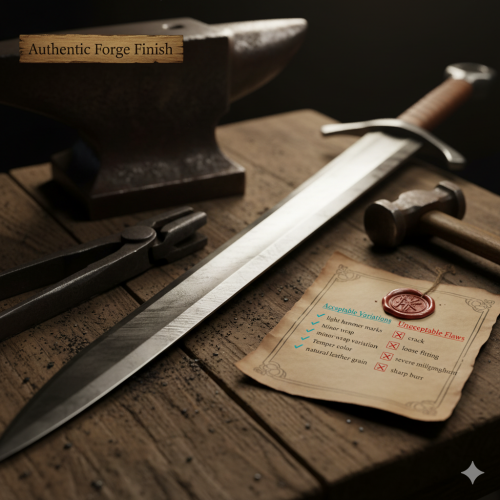
When purchasing higher-end replicas, especially hand-forged pieces, beginners sometimes expect machine-like perfection. However, authentic handcrafting involves natural variations that are actually marks of quality workmanship.
Acceptable variations in handmade pieces:
- Slight asymmetries in forge work
- Individual hammer marks in hand-forged items
- Minor variations in handle wrapping
- Slight color differences in heat treatment
- Natural variations in materials like leather and wood
Unacceptable flaws include:
- Cracks in blades or structural components
- Loose or separating fittings
- Significantly misaligned components
- Sharp burrs or dangerous rough edges
- Poorly executed finishing that looks rushed
Understanding the difference between character and defect helps set appropriate expectations.
Overlooking Provenance and Documentation
Beginners often fail to maintain proper documentation for their collections. This becomes problematic for insurance, resale, or estate planning.
Important documentation includes:
- Purchase receipts with detailed descriptions
- Certificates of authenticity (when provided)
- Maker’s marks and specifications
- Photographs from multiple angles
- Maintenance and repair history
- Appraisals for valuable pieces
Proper documentation protects your investment and helps establish value for insurance purposes or eventual resale.
Starting with Too-Ambitious Pieces
New collectors sometimes begin with extremely expensive or complex pieces before developing the knowledge to appreciate them fully. This can lead to buyer’s remorse or mishandling of valuable items.
Better approach for beginners:
- Start with mid-range pieces from reputable makers
- Learn proper care and handling on less expensive items
- Develop knowledge through research and community engagement
- Progress to investment pieces as expertise grows
- Consider handling/study pieces before display-only collectibles
This graduated approach reduces risk while building essential knowledge and skills.
Conclusion
Avoiding these common mistakes requires patience, research, and honest assessment of your goals as a collector. Take time to learn about different manufacturers, understand construction methods, connect with experienced collectors, and develop clear criteria for what belongs in your collection.
The most successful collectors combine enthusiasm with education, making informed decisions rather than impulsive purchases. By learning from others’ mistakes and following established best practices, you can build a collection that provides lasting satisfaction and value.
Remember that collecting is a journey, not a destination. Every experienced collector made mistakes along the way. The key is learning from them and continuously improving your knowledge and judgment.
Sources and Further Reading
- Britannica – Steel Technology:
https://www.britannica.com/technology/steel – Comprehensive overview of steel types and metallurgy - The Metropolitan Museum of Art – Arms and Armor Collection:
https://www.metmuseum.org/perspectives/articles/2020/arms-armor-collecting – Historical perspective on arms collecting - Victoria and Albert Museum – Arms and Armour Collections:
https://www.vam.ac.uk/collections/arms-and-armour – Reference materials for historical pieces - Association for Renaissance Martial Arts (ARMA):
https://www.thearma.org/ – Resources on historical weapons and martial arts - OSHA Safety Guidelines:
https://www.osha.gov/safety-management – Safety management principles applicable to collections - American Alliance of Museums:
https://www.aam-us.org/ – Professional museum standards for collection care - The Oakeshott Institute:
http://www.oakeshott.org/ – Sword typology and historical research - National Park Service Museum Handbook:
https://www.nps.gov/museum/publications/handbook.html – Preservation guidelines for metal artifacts - Museum of London:
https://www.museumoflondon.org.uk/ – Display and curation resources - Society for Creative Anachronism (SCA):
https://www.sca.org/ – Medieval recreation and authenticity resources - Britannica – Blacksmithing:
https://www.britannica.com/topic/blacksmith – Traditional metalworking techniques - Nolo Legal Resources:
https://www.nolo.com/ – General legal information resource (check local laws specifically)
This guide is intended for educational purposes and represents general best practices in replica collecting. Always verify current laws and regulations in your jurisdiction, and seek professional appraisal for valuable pieces.