
Legal Considerations: Navigating Regulations for Medieval Replica Collectors
Home » Glossary » Collecting & Replicas Hub » Legal Considerations: Navigating Regulations for Medieval Replica Collectors
Legal Considerations: Navigating Regulations for Medieval Replica Collectors
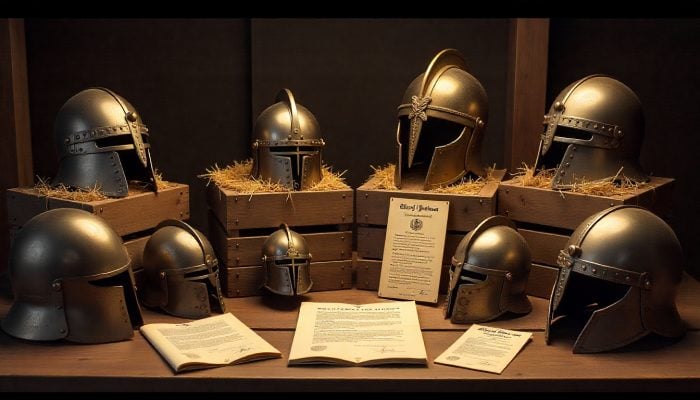
The Complex Legal Landscape of Replica Collecting
Collecting medieval replicas involves navigating a surprisingly complex web of local, state, federal, and international regulations that vary dramatically by jurisdiction. What’s perfectly legal to own in one location may be restricted or prohibited just across a state line or national border. Understanding these legal frameworks protects collectors from potential criminal charges, civil penalties, and confiscation of valuable pieces.
The regulatory environment surrounding replica weapons and armor has evolved significantly over the past several decades. According to the International Association of Chiefs of Police, regulations governing replica weapons have increased by over 400% since 1990, driven by public safety concerns, changing cultural attitudes, and high-profile incidents involving replica weapons. This expanding regulatory framework makes legal literacy essential for responsible collecting.
Beyond simple ownership questions, collectors must understand regulations governing transportation, storage, display, import/export, and even inheritance of their collections. Legal considerations also extend to insurance coverage, liability issues, and the critical distinctions between replicas, reproductions, and actual weapons under various legal definitions.
Understanding Jurisdictional Variations
Federal Frameworks and International Treaties
At the highest level, federal laws and international agreements establish baseline regulations that affect all collectors. The Bureau of Alcohol, Tobacco, Firearms and Explosives (ATF) maintains specific definitions distinguishing antique weapons, replicas, and modern firearms. These distinctions critically impact what collectors can legally acquire, how pieces must be transported, and what documentation is required.
International frameworks add another layer of complexity. The Wassenaar Arrangement, signed by 42 countries, establishes export control guidelines that affect international replica trade. Similarly, UNESCO conventions regarding cultural property can impact the acquisition and movement of certain historical reproductions.
State and Provincial Regulations
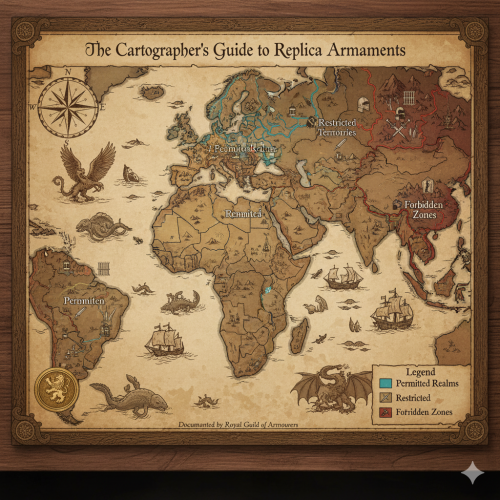
State-level regulations often prove most challenging for collectors to navigate. The National Conference of State Legislatures documents vast disparities in how states classify and regulate replica weapons:
Permissive States: Some jurisdictions treat quality replicas as collectibles or art objects, imposing minimal restrictions beyond basic commerce regulations.
Restrictive States: Others classify certain replicas as weapons regardless of functionality, requiring permits, registration, or prohibiting possession entirely.
Conditional Regulations: Many states impose situational restrictions—items legal to own at home may be prohibited in vehicles, schools, or public spaces.
Municipal Variations: Cities and counties often impose additional restrictions beyond state law, creating patchwork regulatory environments within single states.
The Evolution of Legal Definitions
Legal definitions of weapons versus replicas continue evolving through legislation and court decisions. The American Bar Association notes that courts increasingly focus on:
- Functional Capability: Whether an item can cause injury regardless of intended use
- Public Perception: How reasonable persons would perceive the item
- Context of Possession: Where and how items are displayed or transported
- Intent and Use: The possessor’s demonstrated or stated purposes
Ownership Rights and Restrictions
Categorical Legal Classifications
Understanding how law enforcement and courts classify replicas helps collectors assess legal risks. The National District Attorneys Association identifies these common categories:
Decorative Replicas: Non-functional items clearly intended for display, typically facing minimal regulation except in the most restrictive jurisdictions.
Functional Replicas: Items capable of their historical purpose (cutting, thrusting) often face stricter regulations, sometimes equivalent to modern weapons.
Theatrical Props: Replicas specifically designed for stage/screen use may receive special exemptions but require documentation.
Historical Reproductions: Museum-quality pieces sometimes receive cultural property protections but may face import/export restrictions.

Prohibited Items and Gray Areas
Certain replica types face widespread prohibition or restriction:
Concealed Blade Replicas: Historical daggers, boot knives, and sleeve daggers often violate concealed weapon statutes regardless of decorative intent.
Mechanical Replicas: Spring-loaded or gravity-operated historical weapons frequently fall under switchblade or prohibited weapon statutes.
Combination Weapons: Historical gun-swords, pistol-axes, and similar combinations may violate federal firearms regulations even as non-functional replicas.
Martial Arts Weapons: Numerous jurisdictions specifically prohibit or restrict historical martial arts weapons including nunchucks, throwing stars, and certain sword types.
Transportation and Shipping Protocols
Domestic Transportation Requirements
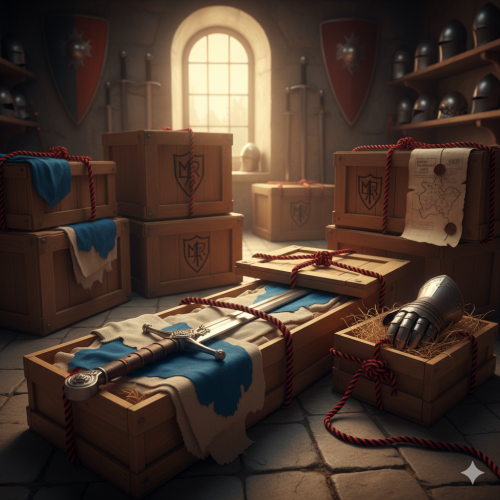
Moving replicas within national borders requires understanding both federal and state transportation laws. The Transportation Security Administration (TSA) maintains specific regulations for air travel with replicas:
Checked Baggage Requirements: Most replicas must travel in checked luggage, properly declared and packaged according to airline policies.
Ground Transportation: State vehicle codes often address weapon transportation, requiring locked containers, trunk storage, or separation from ammunition (for items that could be confused with firearms).
Commercial Shipping: Carriers like UPS, FedEx, and USPS maintain independent policies that may exceed legal requirements. The National Association of Manufacturers recommends always declaring replica contents to avoid shipping violations.
Interstate Commerce Considerations
Moving replicas across state lines invokes interstate commerce regulations. The Federal Trade Commission notes that collectors must comply with:
- Origin State Laws: Legal requirements for removing items from the shipping state
- Destination State Laws: Regulations governing receipt and possession
- Transit State Laws: Potential restrictions in states through which shipments pass
- Federal Interstate Commerce: Regulations governing commercial movement of regulated items
International Trade Regulations
Import Documentation and Procedures
Importing replicas requires navigating customs regulations and international agreements. U.S. Customs and Border Protection requires:
Formal Entry Documentation: For items valued over $2,500, formal customs entry with detailed descriptions and harmonized tariff codes.
Country of Origin Marking: Clear identification of manufacturing country, affecting duty rates and admissibility.
Import Permits: Certain replica types require ATF Form 6 or similar permits regardless of functionality.
Cultural Property Documentation: Reproductions of significant historical items may require proof they aren’t protected cultural artifacts.
Export Controls and Restrictions
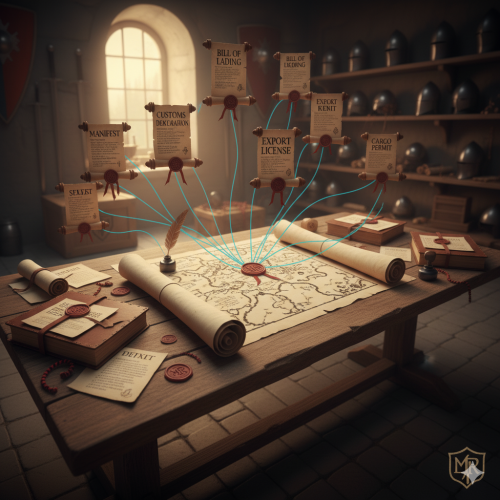
Exporting replicas from the United States involves compliance with Bureau of Industry and Security regulations:
Export Administration Regulations (EAR): Classification of replicas under appropriate Export Control Classification Numbers (ECCNs).
Destination Country Restrictions: Understanding import laws of receiving countries to avoid international shipping violations.
Documentation Requirements: Commercial invoices, export declarations, and potentially export licenses for certain destinations or item types.
Storage and Security Requirements
Legal Storage Obligations
Many jurisdictions impose specific storage requirements for replica weapons. The National Rifle Association Civil Rights Defense Fund documents common requirements:
Secure Storage Laws: Requirements for locked containers, safes, or display cases, particularly in homes with minors.
Separation Requirements: Mandates to store blade replicas separately from any items that could be confused with ammunition or firearm components.
Access Prevention: Legal obligations to prevent unauthorized access by prohibited persons, minors, or individuals with certain mental health conditions.
Insurance Considerations: Many homeowners’ policies require specific storage methods for coverage to apply to weapon replicas.
Display and Exhibition Regulations
Public display of replica collections involves additional legal considerations:
Zoning Restrictions: Home-based displays may violate residential zoning if deemed commercial exhibitions.
Business Licensing: Commercial displays often require specific business licenses and may face additional regulations.
Event Display Permits: Temporary displays at shows, conventions, or educational events typically require permits and insurance.
Security Requirements: Many jurisdictions mandate specific security measures for public display of weapon replicas.

Age-Related Restrictions and Transfers
Purchase and Possession Age Limits
Age restrictions for replica weapons vary significantly by jurisdiction and item type. The National Center for Juvenile Justice reports:
Federal Baselines: While no federal age restrictions exist for most replicas, specific types (particularly those resembling firearms) may fall under federal age limits.
State Variations: Age limits range from 16 to 21 for purchase, with some states having no restrictions while others prohibit all sales to minors.
Parental Consent: Many jurisdictions allow minors to possess replicas with parental consent and supervision.
Educational Exemptions: Students in historical martial arts, theater programs, or educational settings often receive exemptions with proper documentation.
Estate Planning and Inheritance
Transferring replica collections through inheritance requires careful planning:
Probate Considerations: Some jurisdictions require special handling of weapon replicas during probate proceedings.
Interstate Transfers: Heirs in different states may be unable to legally receive certain items.
Age of Heirs: Minor beneficiaries may be legally prohibited from inheriting certain replicas until reaching majority.
Documentation Requirements: Proper inventory and valuation documentation facilitates legal transfer and avoids disputes.
Liability and Insurance Considerations
Personal Liability Exposure
Collectors face potential liability for injuries or damages involving their replicas. The American Insurance Association identifies key risk factors:
Premises Liability: Injuries to visitors who access displayed collections, whether authorized or trespassing.
Attractive Nuisance: Enhanced liability when collections might attract and endanger children.
Negligent Storage: Liability for crimes or injuries committed with improperly secured replicas.
Product Liability: Potential liability when selling or transferring replicas to others.

Insurance Coverage Strategies
Protecting collections and managing liability requires appropriate insurance:
Homeowners Policy Limitations: Standard policies often exclude or limit coverage for weapon replicas.
Scheduled Personal Property: Adding specific coverage for valuable pieces with agreed values.
Collectors Insurance: Specialized policies designed for weapon and armor collections.
Liability Umbrellas: Additional coverage for liability claims exceeding primary policy limits.
Convention and Public Event Regulations
Event-Specific Policies
Conventions, renaissance fairs, and historical reenactments maintain independent weapons policies beyond legal requirements. The Society for Creative Anachronism and similar organizations establish standards including:
Peace-Bonding Requirements: Physical restraints preventing drawing or use of replica weapons.
Inspection Protocols: Mandatory safety checks before entering event spaces.
Functionality Restrictions: Prohibitions on sharp edges or points regardless of historical accuracy.
Insurance Requirements: Proof of personal liability coverage for participants with weapons.
Venue and Municipality Permits
Public events involving replica weapons often require multiple permits:
Special Event Permits: Municipal authorization for gatherings involving weapon displays.
Weapons Display Permits: Specific authorization for public exhibition of replica weapons.
Street Closure Permits: For parades or demonstrations involving replica weapons.
Insurance Certificates: Proof of event liability coverage naming venue and municipality as additional insureds.

Digital Commerce and Online Sales
E-Commerce Platform Policies
Online marketplaces maintain policies that often exceed legal requirements. Major platforms including eBay, Amazon, and Etsy restrict or prohibit certain replica sales regardless of legality. The Electronic Commerce Association recommends understanding:
Platform-Specific Restrictions: Each marketplace maintains unique prohibited items lists.
Geographic Restrictions: Ability to block sales to restricted jurisdictions.
Age Verification Requirements: Systems for confirming buyer age where required.
Documentation Requirements: Platforms may require proof of legality or proper classification.
Interstate and International E-Commerce
Selling replicas online involves complex multi-jurisdictional compliance:
Nexus Considerations: Where sellers have sufficient presence to trigger tax and regulatory obligations.
Drop-Shipping Complications: Legal responsibility when third parties fulfill orders.
Export Control Compliance: Preventing international sales that violate export regulations.
Payment Processing: Some payment providers restrict transactions involving weapon replicas.
Emerging Legal Trends and Future Considerations
Legislative Developments
The National League of Cities tracks several trends affecting replica collectors:
3D Printing Regulations: Emerging laws addressing home manufacture of replica weapons using 3D printing technology.
Ghost Weapon Concerns: Legislation addressing untraceable replicas that could be converted to functional weapons.
Red Flag Laws: Expanding extreme risk protection orders that might affect replica collections.
Public Carry Restrictions: Growing restrictions on public display or carry of replica weapons.
Technology and Enforcement
Advancing technology changes enforcement capabilities and legal requirements:
Digital Registration: Some jurisdictions explore blockchain-based registration systems for replica weapons.
AI-Powered Detection: Enhanced ability to identify replicas in luggage, shipments, and public spaces.
Social Media Monitoring: Increased scrutiny of online replica sales and transfers.
Smart Storage Requirements: Potential mandates for electronically monitored storage systems.

Building Legal Compliance Systems
Documentation Best Practices
Maintaining proper documentation protects collectors legally and financially:
Purchase Records: Receipts, invoices, and seller information for every acquisition.
Provenance Documentation: Historical and ownership documentation for significant pieces.
Appraisals and Valuations: Professional assessments for insurance and estate planning.
Compliance Certificates: Permits, licenses, and authorization documents.
Correspondence Records: Communications with authorities, insurers, and legal advisors.
Professional Resources and Assistance
Several professional resources assist collectors with legal compliance:
Legal Counsel: Attorneys specializing in weapons law, collecting, or cultural property.
Compliance Consultants: Specialists in import/export regulations and interstate commerce.
Insurance Agents: Professionals experienced with collector coverage and liability issues.
Industry Associations: Organizations providing legal updates and advocacy for collectors.
Risk Management Strategies
Proactive Compliance Measures
Minimizing legal risk requires proactive measures:
Regular Legal Audits: Periodic review of collection compliance with current regulations.
Relationship Building: Establishing positive relationships with local law enforcement and regulators.
Community Engagement: Participation in collector organizations that monitor legal developments.
Continuous Education: Staying informed about regulatory changes affecting collections.
Incident Response Planning
Despite best efforts, collectors may face legal challenges:
Emergency Contacts: Maintaining current contact information for legal counsel and advisors.
Documentation Packages: Prepared packets proving legality and compliance.
Media Relations: Understanding how to respond to media inquiries about collections.
Law Enforcement Interaction: Knowing rights and responsibilities when questioned by authorities.

Navigating the Path Forward
The legal landscape surrounding medieval replica collecting will continue evolving as technology advances, social attitudes shift, and new incidents shape public policy. Successful collectors recognize that legal compliance isn’t a one-time achievement but an ongoing responsibility requiring vigilance, adaptation, and commitment to responsible collecting practices.
By understanding the complex interplay of federal, state, local, and international regulations, collectors can pursue their passion while avoiding legal pitfalls. The key lies in thorough research, proper documentation, appropriate insurance, and professional guidance when navigating gray areas or unusual situations.
Remember that legal compliance protects not just individual collectors but the entire collecting community. Irresponsible actions by one collector can trigger restrictive legislation affecting all enthusiasts. By maintaining high standards for legal compliance, the collecting community demonstrates its commitment to public safety while preserving the right to pursue this fascinating hobby.
Essential Legal Resources Directory
Explore our comprehensive legal guidance sections:
- [Weapon Laws by State/Country]: Detailed jurisdiction-specific regulations and requirements
- [Transport and Shipping Regulations]: Safe and legal movement of your collection
- [Convention and Event Policies]: Navigate event-specific rules and requirements
- [Storage Requirements]: Comply with secure storage mandates
- [Age Restrictions]: Understand age-related limitations and transfers
- [Import/Export Documentation]: Master international trade requirements
- [Replica vs. Real Weapon Classifications]: Critical distinctions under the law
Additional Legal Resources
- Bureau of Alcohol, Tobacco, Firearms and Explosives: Federal firearms and weapons regulations
- U.S. Customs and Border Protection: Import/export requirements
- National Conference of State Legislatures: State law databases
- Uniform Law Commission: Multi-state legal frameworks
- International Trade Administration: Export assistance and regulations
Part of the Medieval Collectibles Collecting & Replicas Hub Return to [Collecting & Replicas Hub] | [Medieval Collectibles Home]
Disclaimer: This guide provides general information only and does not constitute legal advice. Laws change frequently and vary by jurisdiction. Always consult qualified legal counsel for specific situations.