
Glossary
Home » Glossary
The Comprehensive Medieval Collectibles Glossary: Your Gateway to Historical & Fantasy Expertise
Welcome to the most extensive online resource for medieval weapons, armor, clothing, and collectibles terminology. Whether you’re a seasoned collector, historical reenactor, LARP enthusiast, or newcomer to the world of medieval replicas, our glossary provides authoritative definitions, detailed explanations, and expert insights into over 400 specialized terms spanning nine major categories.
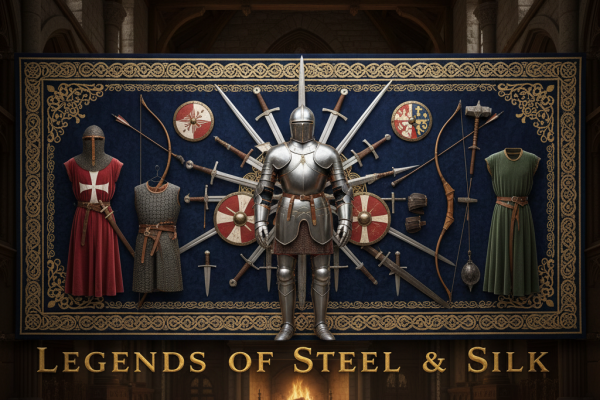
Why This Glossary Matters
The world of medieval & fantasy collectibles encompasses centuries of history, diverse cultures, and a rich tapestry of craftsmanship techniques. Understanding the proper terminology isn’t just academic – it’s essential for making informed purchasing decisions, communicating with other collectors, and appreciating the historical significance of each piece. According to the Arms & Armor Department at The Metropolitan Museum of Art, proper terminology helps collectors distinguish between authentic reproductions and fantasy pieces, understand construction methods, and evaluate quality standards.
Quick Navigation
Navigate Our Knowledge Hubs
Master the Language of Medieval Warfare
Explore comprehensive terminology for swords, daggers, polearms, axes, hammers, and ranged weapons. From understanding the difference between a longsword and a broadsword to recognizing the tactical advantages of various polearm designs, this hub covers over 80 weapon types with detailed specifications, historical context, and collecting considerations. Learn why the Oakeshott Typology revolutionized sword classification and discover how modern reproduction standards evolved from museum pieces.

Decode the Complexity of Medieval Protection
Navigate the intricate world of armor terminology, from chainmail construction techniques to the articulated systems of full plate harness. This hub demystifies terms like “bascinet,” “pauldron,” and “brigandine” while explaining how different armor styles evolved across regions and time periods. The Wallace Collection notes that understanding armor terminology is crucial for appreciating the engineering marvels that allowed knights to maintain mobility while wearing up to 60 pounds of steel.

Unravel the Threads of Medieval Fashion
From noble court dress to common peasant garb, medieval clothing tells stories of social status, regional identity, and practical necessity. This hub covers everything from basic tunics and kirtles to elaborate houppelandes and hennins. Understanding terms like “cotehardie,” “braies,” and “liripipe” helps collectors choose historically accurate garments for their specific period and social class representation. The Medieval.org Fashion Archives emphasizes how proper terminology enables authentic period presentation.

Journey Through Time and Culture
Medieval history spans over a millennium and encompasses diverse cultures from Viking raiders to Japanese samurai. This hub clarifies period-specific terminology, cultural variations, and the evolution of military technology across different eras. Learn to distinguish Early Medieval from High Gothic styles, understand the nuances of Viking Age versus Norman Conquest equipment, and explore how the Crusades influenced European martial culture. The British Museum’s Medieval Collection demonstrates how period knowledge enhances collecting focus and authenticity.

Connect with Living History Communities
The medieval collectibles world thrives through active communities of reenactors, LARP participants, SCA members, and living historians. This hub explains the specialized terminology of different hobby groups, event types, and participation levels. From understanding “melee scenarios” in reenactment battles to navigating LARP “character builds,” this section bridges the gap between collecting and active use. The Society for Creative Anachronism has developed extensive vocabularies that have become standard across multiple hobby communities.

Appreciate the Art Behind the Artifact
Understanding construction methods and materials elevates collecting from mere acquisition to informed appreciation. This hub covers traditional smithing techniques, leather working processes, textile production methods, and modern reproduction technologies. Learn why “spring steel” matters for functional swords, how “case hardening” affects durability, and what distinguishes “hand-forged” from “stock removal” blade construction. The American Bladesmith Society provides standards that inform quality assessment in modern reproductions.

Bridge Historical Accuracy with Creative Imagination
Not all medieval collectibles stem from historical sources. This hub celebrates the fantasy realm, from Tolkien-inspired designs to Game of Thrones replicas. Understanding terms like “fantasy hybrid weapons,” “dragon motifs,” and “elven aesthetics” helps collectors navigate the creative interpretations of medieval themes. The intersection of historical and fantasy collecting has created unique subcategories that the Tolkien Society notes have significantly influenced modern medieval revival movements.

Master the Technical Language
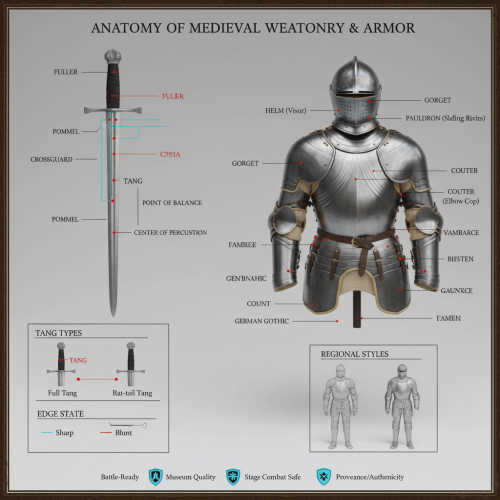
Beyond specific items, medieval collectibles involve specialized vocabulary for describing conditions, authenticity levels, combat techniques, and anatomical weapon parts. This hub provides essential terminology for discussing provenance, understanding auction descriptions, and communicating with dealers and fellow collectors. Terms like “battle-ready,” “museum quality,” and “stage combat safe” carry specific meanings crucial for informed purchasing, as outlined by the Association of Renaissance Martial Arts.
Navigate the Modern Marketplace
The contemporary medieval collectibles market operates with its own vocabulary of quality standards, legal considerations, and valuation metrics. This hub addresses practical collecting terminology, from understanding “functional” versus “decorative” classifications to navigating import regulations and display considerations. Learn about authentication methods, storage requirements, and market trends that influence collecting strategies. The International Association of Museums provides guidelines that inform ethical collecting practices and reproduction standards.
Building Your Knowledge Foundation
For New Collectors
Start with the Collecting & Replicas Hub to understand basic quality standards and terminology, then explore specific weapon or armor types that interest you. The Royal Armouries Museum recommends beginning collectors focus on one category to develop expertise before expanding their collections.
For Reenactors & LARP Participants
The Activities & Hobbies Hub provides essential vocabulary for your specific community, while period-appropriate sections help ensure historical accuracy. Cross-reference with the Crafting & Materials Hub to understand equipment maintenance and modification options.
For Academic Researchers
Our citations link to museum collections, archaeological reports, and scholarly publications. Each entry strives for historical accuracy while acknowledging variations in terminology across different academic traditions, as noted by the Medieval Academy of America.

Quality Standards & Authentication
Understanding terminology extends beyond identification to quality assessment. Key concepts covered throughout our glossary include:
- Construction Methods: Hand-forged vs. machine-made distinctions
- Material Grades: Steel types, leather qualities, textile specifications
- Authenticity Levels: Museum-quality reproductions vs. inspired interpretations
- Functional Classifications: Battle-ready, display-only, stage combat safe
- Provenance Documentation: Certificates, maker’s marks, historical references
The Worshipful Company of Armourers and Brasiers maintains standards that inform modern reproduction quality metrics referenced throughout our glossary.
Regional & Cultural Perspectives
Medieval collectibles span global traditions, each with unique terminology:
- European Traditions: From Scottish claymores to Italian rapiers
- Eastern Influences: Japanese katana, Middle Eastern scimitars, Indian tulwars
- Viking Heritage: Specific Norse terminology and construction methods
- Islamic Arms: Distinctive designs and cultural significance
- Asian Armor: Unique construction techniques and materials
The Victoria and Albert Museum emphasizes how understanding cultural context enhances appreciation and prevents misrepresentation in collecting practices.
Staying Current with Terminology
The medieval collectibles field continuously evolves with new archaeological discoveries, improved reproduction techniques, and emerging collecting trends. Our glossary undergoes regular updates to reflect:
- Archaeological Findings: New discoveries that reshape historical understanding
- Technical Innovations: Modern materials and construction methods
- Market Developments: Emerging categories and valuation changes
- Community Standards: Evolving safety and authenticity requirements
- Legal Updates: Changing regulations affecting collectors
Subscribe to our newsletter for quarterly updates on new terms and revised definitions based on latest scholarship from institutions like the Archaeological Institute of America.
Contributing to Our Knowledge Base
This glossary grows through community participation. We welcome:
- Term Suggestions: Identify gaps in our coverage
- Regional Variations: Share local or cultural terminology differences
- Historical Corrections: Provide documented updates to definitions
- Photo Contributions: Submit images illustrating specific terms
- Expert Insights: Share specialized knowledge from your collecting focus
Contact our editorial team to contribute to this living resource that serves the global medieval collectibles community.
Beyond Definitions: Practical Applications
Our glossary serves multiple practical purposes:
Informed Purchasing
- Decode dealer descriptions and auction listings
- Understand quality claims and authenticity statements
- Recognize value indicators and red flags
- Compare products across different manufacturers
Collection Management
- Properly catalog and document pieces
- Communicate accurately with insurers and appraisers
- Create detailed condition reports
- Plan focused collection development
Community Engagement
- Participate knowledgeably in forums and discussions
- Attend events with appropriate vocabulary
- Network effectively with other collectors
- Share expertise with newcomers
Educational Outreach
- Teach others about medieval history and culture
- Create accurate museum or display labels
- Write informed articles or blog posts
- Develop educational programs
Start Your Journey
Whether you’re identifying your first sword purchase, researching armor for a reenactment impression, or expanding an established collection, our glossary provides the linguistic foundation for your medieval collectibles journey. Each term opens doorways to deeper understanding, connecting you with centuries of martial tradition, craftsmanship excellence, and collecting passion.
Begin exploring our comprehensive information hubs to build your expertise, enhance your collection, and join a global community united by appreciation for medieval & fantasy material culture. From the weight of a war hammer to the whisper of silk court dress, every term tells a story – and every story enriches your collecting experience.

The Medieval Collectibles Glossary represents the collaborative knowledge of collectors, historians, craftspeople, and enthusiasts worldwide. We acknowledge the museums, academic institutions, and cultural organizations whose research and preservation efforts make this resource possible.
Last Updated: September 26, 2025
Total Terms: 400+
Contributing Experts: 50+
Cited Sources: 200+
For questions, corrections, or contributions, contact our editorial team at info@medievalcollectibles.com