
Reenactment & LARP Terminology: Where History Meets Fantasy
Home » Glossary » Terminology Hub » Reenactment & LARP Terminology: Where History Meets Fantasy
Reenactment & LARP Terminology: Where History Meets Fantasy
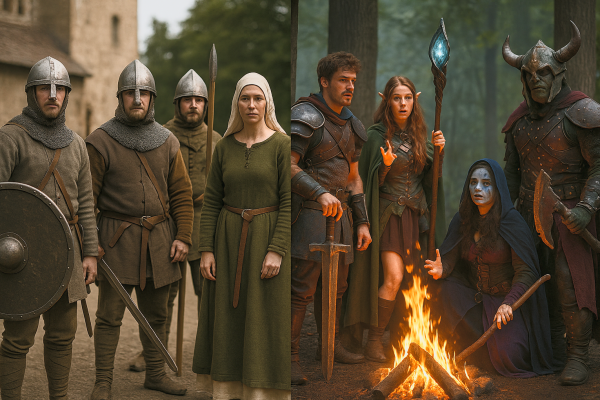
The Living Traditions of Medieval Recreation
Historical reenactment and Live Action Role Playing (LARP) represent two vibrant communities that bring medieval culture to life through distinct yet overlapping approaches. While reenactors pursue historical authenticity with academic rigor, LARPers blend historical elements with fantasy to create immersive storytelling experiences. Both communities have developed rich vocabularies that reflect their unique philosophies, safety requirements, and cultural practices.
Understanding the terminology of these communities serves multiple purposes for collectors and participants. According to the International Living History Federation, over 2.5 million people worldwide participate in historical reenactment, while the Global LARP Census estimates 1.3 million active LARPers across 67 countries. These communities drive significant demand for medieval replicas, influence manufacturing standards, and preserve both historical knowledge and creative traditions.
The vocabulary explored in this hub reveals how modern enthusiasts interpret, adapt, and reimagine medieval culture. From the exacting standards of museum-quality reenactment to the creative freedom of high fantasy LARP, each term encodes community values, safety protocols, and shared experiences that define these remarkable hobbies.
The Spectrum of Historical Interpretation
Living History and Museum Standards
Living history represents the most academically rigorous approach to historical recreation. Practitioners, often working with institutions like the Colonial Williamsburg Foundation or English Heritage, maintain strict authenticity standards that influence terminology and practice across the broader reenactment community.
First-Person Interpretation: Performers remain in character, using period-appropriate language and knowledge. This demanding practice requires extensive research and training, creating specialized vocabulary for breaking character (“breaking frame”) or handling anachronistic situations (“time travelers” for modern visitors).
Material Culture Accuracy: Living historians distinguish between “documented” items (exact museum reproductions), “plausible” items (consistent with period evidence), and “necessary anachronisms” (modern safety equipment). The Association for Living History, Farm and Agricultural Museums maintains detailed guidelines defining these categories.
Experimental Archaeology: Academic practitioners test historical theories through practical recreation. Universities like University of Exeter’s Experimental Archaeology program contribute terminology distinguishing between “reconstruction” (exact copying) and “construction” (building with period techniques).
Military Reenactment Traditions
Military reenactment focuses on martial aspects of historical periods, developing extensive terminology for organization, equipment, and combat simulation. The American Civil War reenactment community, while not medieval-focused, established many terms adopted by medieval reenactors.
Unit Organization: Groups adopt historical military structures, using terms like “lance” (cavalry unit), “battle” (tactical division), and “household” (noble retinue). The Medieval Siege Society maintains period-appropriate command structures for large events.
Combat Safety Protocols: Terms like “killing blow” (strike that would be lethal if real), “honor system” (self-calling hits), and “minimum safe distance” reflect the balance between realism and safety. Different rule systems—ACL (Armored Combat League), SCA (Society for Creative Anachronism), and BOTN (Battle of the Nations)—each contribute unique terminology.
Campaign Events: Multi-day immersive events develop specialized vocabulary: “in-camp” (historical area), “modern camp” (parking and facilities), “night tactical” (after-dark scenarios), and “forced march” (period-accurate movement between locations).
Cultural and Civilian Reenactment
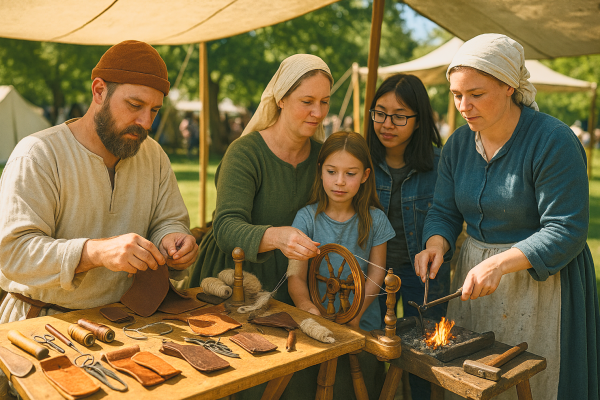
Beyond military aspects, reenactors recreate medieval civilian life, developing terminology for social structures, crafts, and daily activities. The Company of Saynt George exemplifies groups focusing on complete medieval life recreation.
Social Hierarchy Recreation: Terms define assumed medieval roles: “gentle” (nobility), “yeoman” (middle class), “common” (working class). Events use “precedence” systems determining social interactions, seating, and activities.
Craft Demonstration Vocabulary: Artisans use terms distinguishing “period process” from “period product”—acknowledging that modern safety or practical constraints may require modified techniques while achieving authentic results.
Immersion Levels: Events classify participant commitment: “soft-kit” (basic costume), “hard-kit” (fully authentic), “progressive” (improving over time), and “tier system” (formal authenticity requirements).
LARP: Fantasy Made Physical
Core LARP Concepts
Live Action Role Playing transforms tabletop gaming into physical reality, creating unique terminology that bridges gaming, theater, and sport. The International LARP Authority recognizes multiple LARP styles, each contributing vocabulary.
Character vs. Player Separation: Fundamental LARP terms include “IC” (in-character), “OOC” (out-of-character), “OOG” (out-of-game), and “meta-gaming” (using player knowledge the character wouldn’t have). “Bleed” describes emotional overlap between player and character experiences.
Game Mechanics Translation: Physical representations of game rules create terms like “hit points” (health representation), “spell packets” (thrown objects representing magic), “skill cards” (abilities documentation), and “character sheet” (statistics record).
Safety and Consent Systems: Modern LARP emphasizes safety through terms like “OK check-in” (verifying player comfort), “lookdown” (safety pause), “red/yellow/green” (consent signals), and “debrief” (post-game discussion).
LARP Combat Systems
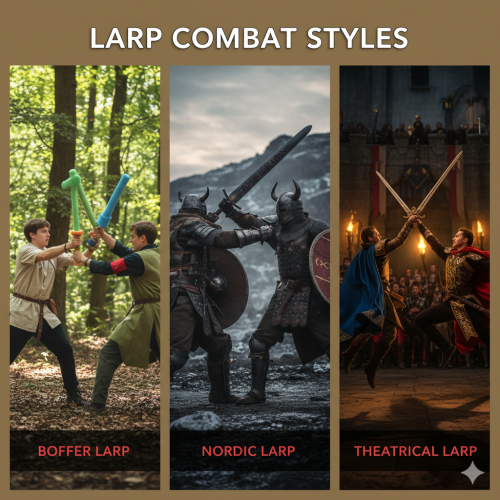
LARP combat varies dramatically from full-contact to purely theatrical, each system contributing specialized terminology.
Boffer Combat: Using foam weapons creates vocabulary: “core” (weapon center), “striking surface” (legal hit area), “machine gunning” (rapid invalid strikes), and “drum rolling” (edge case rapid hits). The Amtgard Rulebook codifies extensive boffer combat terminology.
Point-Based Systems: Some LARPs use numerical damage, creating terms like “calling damage” (verbally announcing hit value), “armor points” (protection value), and “threshold” (damage before effect).
Nordic LARP Combat: Emphasizing narrative over competition introduces concepts like “dramatic combat” (choreographed for story), “honor combat” (trust-based resolution), and “fate cards” (predetermined outcomes).
World-Building and Immersion
LARP creates persistent fictional worlds requiring extensive terminology for non-historical elements while maintaining medieval atmosphere.
Fantasy Integration: Terms navigate mixing historical and fantastical: “low fantasy” (minimal magic), “high fantasy” (prevalent magic), “historical-inspired” (medieval aesthetic without accuracy), and “anachronism-friendly” (accepting mixed periods).
Persistent World Elements: Campaign LARPs develop terms for continuity: “downtime” (between-game actions), “BGA” (between-game actions), “persistent consequences” (permanent character changes), and “world plot” (overarching storyline).
Economic Systems: In-game economies create vocabulary: “commodity cards” (resource representation), “coin rep” (physical currency), “production skills” (crafting abilities), and “game balance” (economic fairness).
Equipment Standards and Terminology
Authenticity Classifications
Both communities classify equipment by authenticity and appropriateness, though standards differ significantly.
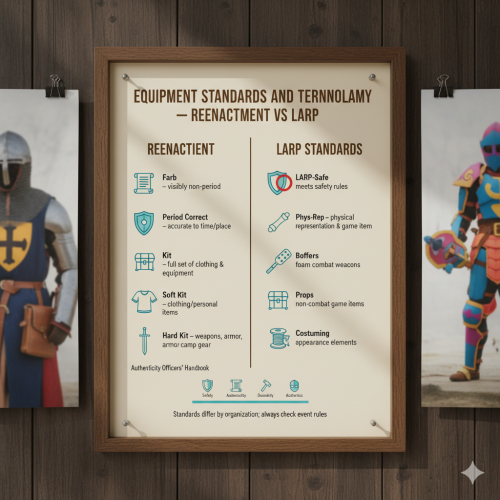
Reenactment Standards: The Authenticity Officers’ Handbook defines:
- Farb: Visibly non-period items or practices
- Period Correct: Accurate to specific time and place
- Kit: Complete set of clothing and equipment
- Soft Kit: Clothing and personal items
- Hard Kit: Weapons, armor, and camp equipment
LARP Standards: Equipment categories reflect game needs:
- LARP-Safe: Meeting safety requirements regardless of appearance
- Phys-Rep: Physical representation of game items
- Boffers: Foam weapons for combat
- Props: Non-combat game items
Costuming: Character appearance elements
Safety Equipment Vocabulary
Both communities prioritize safety while maintaining immersion, developing terminology for protective equipment.
Hidden Protection: Terms for concealed modern safety gear: “under-armor padding,” “hidden cups” (groin protection), “period-looking safety glasses,” and “disguised first aid.”
Visible Safety Requirements: Some situations require obvious protection: “list fence” (tournament barriers), “marshal tabards” (official identification), “safety holds” (combat pauses), and “medical holds” (injury response).
Weapon Safety Standards: Different communities maintain varying standards: “SCA legal,” “ACL approved,” “LARP-safe,” “battle-ready,” and “display only” define acceptable use contexts.
Event Types and Structures
Historical Event Categories
Reenactment events range from public education to private immersion, each type developing distinct vocabulary.
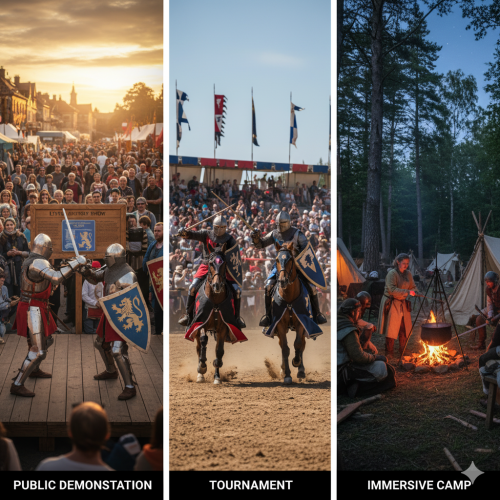
Public Demonstrations: Educational events use terms like “interpretive talk” (scripted presentation), “walk-through history” (guided experience), “timeline event” (multiple periods represented), and “living history encampment” (static display).
Competitive Tournaments: Martial competitions employ specialized terms: “list field” (combat area), “bear pit” (continuous fighting), “melee” (group combat), “passage of arms” (formal challenge), and “deed of arms” (specific combat format).
Immersive Events: Private authentic experiences create vocabulary: “time bubble” (isolated historical space), “first person event” (mandatory character immersion), “historical scenario” (recreating specific events), and “experimental history” (testing historical theories).
LARP Event Formats
LARP events vary from afternoon adventures to week-long campaigns, each format contributing terminology.
One-Shot Events: Single-session games use terms: “pre-generated characters” (provided roles), “module” (scripted encounter), “hook” (plot introduction), and “wrap” (event conclusion).
Campaign Events: Ongoing storylines create vocabulary: “chapter” (local group), “national” (multi-chapter event), “character advancement” (progression system), and “retirement” (character conclusion).
Nordic/Immersive LARP: High-immersion events introduce concepts: “360-degree environment” (fully decorated space), “sandbox” (open-ended play), “black box” (minimalist representative space), and “workshop” (pre-game preparation).
Community Organization and Culture
Group Structures
Both communities organize into various group types with specific terminology.
Reenactment Organizations:
- Household: Informal social group often camping together
- Company: Military unit with command structure
- Guild: Craft or merchant organization
- Order: Religious or chivalric organization
- Confederation: Multiple groups sharing standards
LARP Organizations:
- Game System: Rules and setting framework
- Chapter: Local game instance
- Staff/NPCs: Game organizers and support
- Player Base: Regular participants
- Plot Team: Story creators and managers
Social Dynamics and Etiquette
Community cultures develop extensive unwritten rules encoded in terminology.
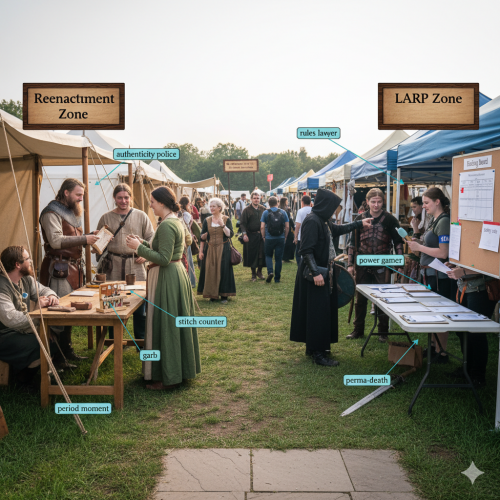
Reenactment Social Terms: “Authenticity police” (overly critical members), “stitch counter” (obsessive detail focus), “period moment” (perfect historical immersion), “garb” (historical clothing), and “mundane” (modern life).
LARP Social Terms: “Rules lawyer” (exploiting technicalities), “power gamer” (optimization focus), “murder hobo” (combat-only player), “NPC shift” (playing organizer roles), and “perma-death” (permanent character loss).
Craft and Production Terminology
Historical Reproduction Methods
Reenactors pursuing authenticity develop vocabulary for production techniques and standards.
Manufacturing Classifications:
- Hand-Forged: Traditional blacksmithing techniques
- Machine-Assisted: Modern tools achieving period results
- Cast: Molded production (often discouraged)
- Imported: Mass-produced items (varying quality)
- Custom Commission: Bespoke pieces to specification
Documentation Standards: Terms describe research levels: “primary source” (period documents), “archaeological find” (excavated example), “artistic representation” (period artwork), “conjecture” (educated guess), and “fantasy” (no historical basis).
LARP Crafting Culture
LARP’s DIY ethos creates extensive crafting vocabulary distinct from historical recreation.
Construction Methods:
- EVA Foam: Thermoplastic crafting material
- Worbla: Moldable plastic for armor
- Foam Clay: Detailing material
- Pool Noodle: Cheap boffer core
- DAP Contact: Adhesive for foam weapons
Aesthetic Styles: LARP recognizes various visual approaches: “realistic” (historically inspired), “fantasy aesthetic” (explicitly non-historical), “post-apocalyptic medieval” (mixed tech levels), “high production value” (expensive/professional), and “budget build” (economical solutions).
Performance and Interpretation
Educational Presentation
Living history education develops specialized performance terminology.
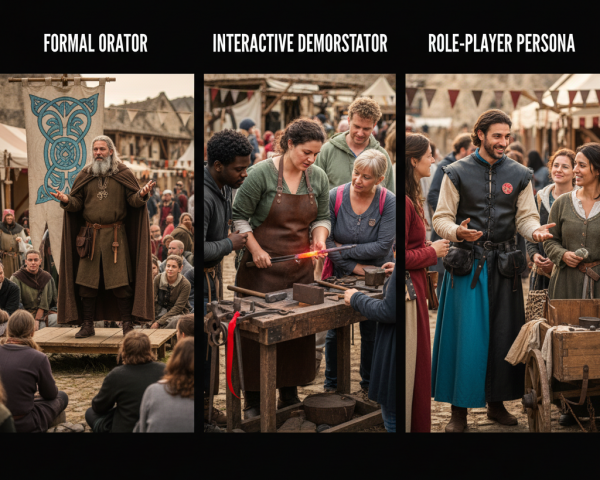
Interpretation Styles:
- First Person: Never breaking character
- Third Person: Discussing history as educator
- Ghost Interpretation: Portraying historical dead
- Comparative: Contrasting periods
- Hands-On: Interactive demonstrations
Audience Management: Terms for visitor interaction: “time traveler” (modern visitor in first person), “breaking the fourth wall” (addressing anachronisms), “interpretive moment” (teaching opportunity), and “crowd control” (managing large groups).
LARP Acting and Immersion
LARP performance combines improvisational theater with gaming, creating unique terminology.
Acting Techniques:
- Steering: Guiding scenes toward desired outcomes
- Spotlighting: Giving others dramatic focus
- Scene Framing: Establishing context
- Narrative Authority: Player story control
- Dramatic Timing: Pacing revelations
Immersion Levels: Terms describe engagement depth: “light immersion” (casual roleplay), “deep immersion” (method acting approach), “functional” (minimal necessary roleplay), and “bleed management” (controlling emotional spillover).
Safety Protocols and Risk Management
Combat Safety Systems
Both communities prioritize safety while maintaining activity excitement, developing extensive safety vocabulary.
Reenactment Combat Safety:
- Calibration: Adjusting force levels
- Progressive Training: Skill development stages
- Authorization: Combat certification
- Marshal: Safety official
- Hold: Universal stop command
LARP Combat Safety:
- Lightest Touch: Minimal contact standard
- Full Contact: Padded heavy combat
- Pull: Reducing blow force
- Charging: Unsafe rushing
- Safety Brief: Pre-game rules review
Medical and Emergency Terms
Events require medical preparedness, creating specialized vocabulary.
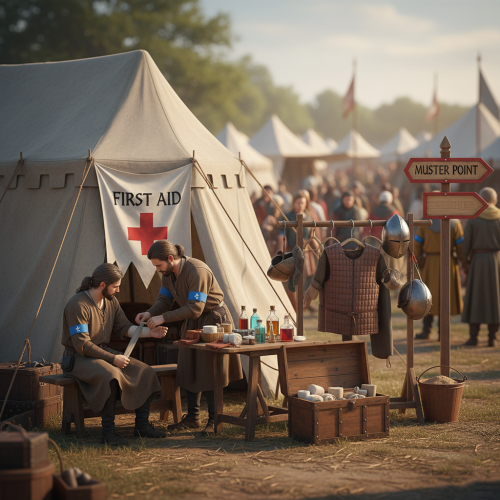
Medical Preparedness: “Chirurgeon” (medical officer), “leech” (period medical demonstrator), “modern medical” (actual treatment), “medical hold” (emergency stop), and “evac plan” (emergency procedures).
Risk Documentation: “Waiver” (liability release), “medical disclosure” (health information), “emergency contact” (notification person), “site hazards” (location dangers), and “incident report” (accident documentation).
Technology and Modern Adaptations
Digital Integration
Modern technology creates new terminology as communities adapt to digital tools.
Online Components: “Virtual court” (online ceremony), “digital marketplace” (e-commerce), “Facebook authentication” (photo documentation), “wiki” (shared knowledge base), and “Discord server” (communication platform).
Hybrid Events: COVID-19 accelerated terminology for mixed formats: “hybrid event” (in-person and online), “virtual feast” (online social gathering), “distance authorization” (remote training certification), and “pod events” (small group gatherings).
Modern Conveniences
Balancing historical immersion with practical needs creates vocabulary for necessary anachronisms.
Acceptable Modernisms: “Disguised cooler” (hidden modern storage), “period pavilion over modern tent” (doubled shelter), “solar charger” (hidden power), “prescription glasses” (medical necessity), and “mobility aids” (accessibility equipment).
Communication Systems: “Radio protocol” (modern coordination), “drum signals” (period-looking communication), “runner system” (message delivery), “gate check” (entry communication), and “lost child protocol” (safety procedures).
Economic Systems and Commerce
Historical Trade Recreation
Reenactment markets recreate medieval commerce with varying authenticity levels.
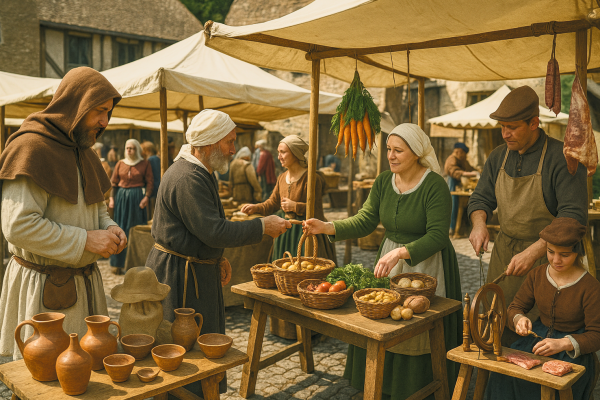
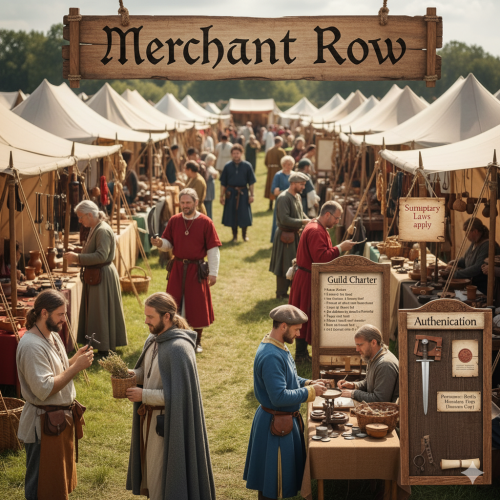
Trade Terminology: “Period barter” (historical exchange), “coin of the realm” (event currency), “merchant row” (vendor area), “guild charter” (vendor rules), and “sumptuary laws” (status-based restrictions).
Authentication Methods: “Maker’s mark” (craftsman identification), “guild approval” (quality certification), “provenance” (item history), “documentation” (research support), and “museum copy” (exact reproduction).
LARP Economics
Game economies create complex vocabulary for virtual wealth and resources.
Currency Systems: “Copper/silver/gold” (traditional tiers), “resource cards” (commodity representation), “bank” (game treasury), “income” (between-game earnings), and “upkeep” (maintenance costs).
Trade Mechanics: “Merchant skills” (trading abilities), “production cycles” (crafting periods), “market board” (trade posting), “auction house” (competitive sales), and “economic plot” (finance-based story).
Cultural Movements and Philosophy
Historical Accuracy Debates
The reenactment community continuously debates authenticity, generating philosophical terminology.
Authenticity Spectrums: “Period Nazi” (extreme authenticity), “mainstream” (balanced approach), “progressive authentic” (improving over time), “good enough” (acceptable minimum), and “fantasy crossover” (mixed approach).
Research Standards: “Primary source only” (strictest evidence), “academic consensus” (scholarly agreement), “experimental archaeology” (practical testing), “living tradition” (continuous practice), and “revival” (recreated practice).
LARP Design Philosophy
LARP theory develops terminology for game design and player experience.
Design Schools: “Gamist” (challenge focus), “narrativist” (story focus), “simulationist” (realism focus), “Nordic” (artistic/immersive), and “American” (competitive/statistical).
Player Experience Goals: “Flow state” (optimal engagement), “transformative experience” (personal growth), “catharsis” (emotional release), “power fantasy” (wish fulfillment), and “collaborative storytelling” (shared narrative).
The Convergence of Communities
Crossover Events and Practices
Increasingly, events blend reenactment and LARP elements, creating hybrid terminology.
Mixed Events: “Historical LARP” (period-accurate roleplay), “fantasy reenactment” (non-historical immersion), “educational LARP” (learning through play), “living mythology” (legendary recreation), and “alternate history” (what-if scenarios).
Shared Practices: Both communities share certain terms: “garb” (costume), “feast” (meal event), “court” (ceremony), “household” (social group), and “persona” (character identity).

Equipment Crossover
Manufacturers increasingly serve both markets, creating vocabulary for dual-use items.
Multi-Purpose Gear: “Reenactment and LARP safe” (meeting both standards), “convertible” (adjustable for different uses), “modular” (reconfigurable components), “dual documentation” (historical and fantasy versions), and “aesthetic neutral” (fitting both contexts).
Quality Standards: Terms bridge communities: “combat ready” (functional), “display quality” (appearance focused), “convention safe” (meeting venue rules), “photo ready” (visually impressive), and “starter gear” (entry level).
Future Directions and Emerging Trends
Technological Integration
Advancing technology creates new possibilities and terminology.
Augmented Reality: “AR overlay” (digital enhancement), “virtual monsters” (digital opponents), “achievement tracking” (gamification), “digital character sheet” (app-based records), and “geo-locked content” (location-based elements).
Digital Crafting: “3D printed armor” (additive manufacturing), “laser-cut accessories” (precision cutting), “CNC foam” (machine-carved weapons), “digital embroidery” (machine decoration), and “LED integration” (electronic effects).
Inclusivity and Accessibility
Both communities increasingly prioritize inclusion, developing supportive terminology.
Accessibility Adaptations: “Mobility friendly” (wheelchair accessible), “low-combat” (reduced physical demands), “quiet zone” (sensory relief), “ASL interpretation” (deaf accessibility), and “adaptive equipment” (modified gear).
Inclusive Practices: “Gender neutral” (non-binary friendly), “cultural consultation” (respectful representation), “content warnings” (sensitive material notice), “pronoun badges” (identity respect), and “accessibility coordinator” (inclusion officer).
Environmental Consciousness
Sustainability concerns generate new vocabulary in both communities.
Green Practices: “Leave no trace” (environmental respect), “sustainable materials” (eco-friendly choices), “carbon offset” (travel compensation), “local sourcing” (reduced transportation), and “repair culture” (maintenance over replacement).
Navigating the Terminology Landscape
The vocabularies of reenactment and LARP continue evolving as communities grow, merge, and adapt to changing social contexts. Understanding these terms enables meaningful participation, informed equipment purchases, and appreciation for the dedication these communities bring to their crafts.
Whether pursuing rigorous historical accuracy or fantastical adventure, participants share common ground in their passion for bringing the medieval world to life. The terminology explored here bridges academic study and playful creativity, serious craftsmanship and imaginative expression, individual achievement and community collaboration.
For collectors, understanding these communities’ vocabularies reveals important market segments, quality standards, and use contexts for medieval replicas. For participants, mastering terminology enables fuller engagement with chosen communities. For observers, this vocabulary opens windows into remarkable subcultures that preserve history while creating new traditions.
Resource Navigation
Explore our comprehensive terminology guides:
Historical Reenactment
- [Living History Terms]: Museum and educational interpretation vocabulary
- [Military Reenactment Terms]: Combat, tactics, and organization
- [Authenticity Standards]: Documentation and accuracy terminology
- [Event Organization]: Planning and running historical events
LARP Terminology
- [Game Mechanics Terms]: Rules and system vocabulary
- [Character and Story Terms]: Roleplay and narrative elements
- [Combat Systems]: Fighting styles and safety protocols
- [World-Building Vocabulary]: Creating immersive environments
Shared Concepts
- [Costume and Garb Terms]: Clothing and appearance vocabulary
- [Equipment Classifications]: Gear standards and categories
- [Safety Protocols]: Risk management and emergency procedures
- [Community Organization]: Group structures and social dynamics
Additional Resources
Organizations and Associations:
- Society for Creative Anachronism: Largest medieval recreation organization
- Living History Association: Professional interpreter resources
- LARP Alliance: International LARP community
- Armored Combat League: Full-contact medieval fighting
- Company of Saynt George: Premier living history group
Academic and Museum Resources:
- International Museum of the Horse: Equestrian reenactment resources
- Middelaldercentret: Danish medieval center
- Guédelon Castle: Experimental archaeology project
- Kentwell Hall: Tudor recreation programs
Part of the Medieval Collectibles Terminology Hub Return to [Terminology Hub] | [Medieval Collectibles Home]